

Gleason Will Showcase Gear Technology Solutions at IMTS 2026
Gleason invites customers to visit booth No. 236909, North Building, Level 3, at IMTS 2026 in Chicago, September 14-19. The exhibit will feature the latest developments in gear design, manufacturing and inspection technology, including Closed-Loop Manufacturing and Lights-Out Production, complemented by the Gleason Digital Ecosystem. Gleason’s gear technology experts will be available to discuss specific applications, such as the manufacture of gears for humanoid robots, aerospace and energy industries, as well as solutions addressing other key global trends shaping the future of gear manufacturing.
KISSsoft Release 2026 offers the design and optimization of gears and transmissions, complemented by integrated system-level analysis. New features include flexibly configurable maps, support for REXS V1.7, new hob types, updated calculations for plastic gears and hydrodynamic plain bearings, as well as new modules for the design of hobbing and profile milling processes.
The P600/800G Profile Grinding Machine will be demonstrated live. It provides versatility for the hard finishing of external and internal gears, worms and long shafts. Onboard gear inspection and innovative technology functions help improve quality and productivity while reducing manufacturing costs.
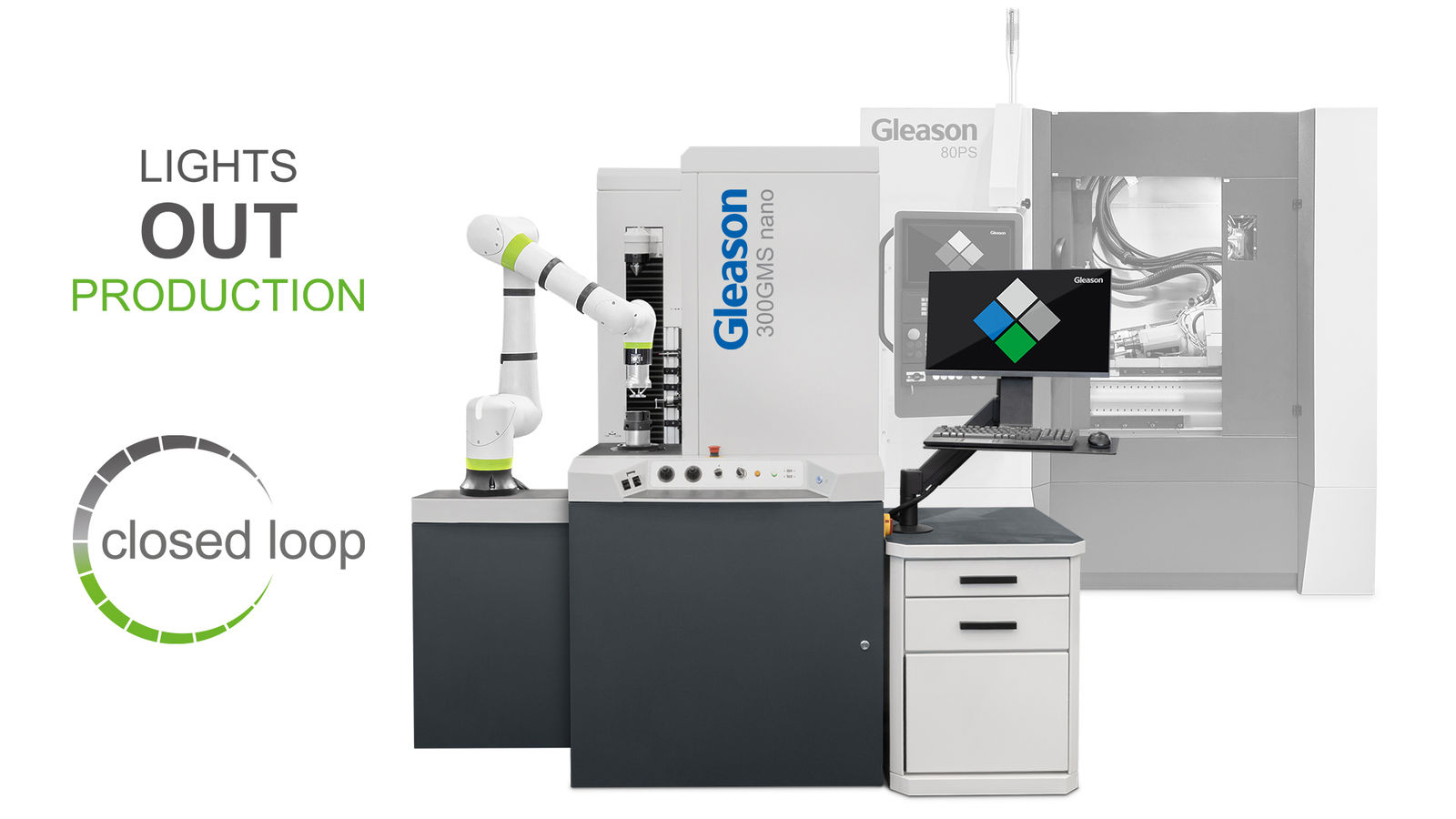
With the 300GMSP nano Gear Metrology System for production environments, Gleason will demonstrate a metrology solution for measuring submicron surface finishes with skidless probe technology. Advanced software tools including Advanced Waviness Analysis and KTEPS analyze waviness in profile and lead and support the evaluation of gear noise behavior. With integrated cobot loading and the Gleason Closed Loop System, the solution becomes a key component of highly automated lights-out production strategies.
A major focus of the exhibit will be advanced Closed Loop Systems for highly automated production environments. Integrated solutions combine manufacturing, automation, gear inspection and digital process integration. Measurement data is transferred directly back to the manufacturing process, enabling manually prompted or automatic corrections. This helps increase productivity, process stability and gear quality with minimal operator intervention.