



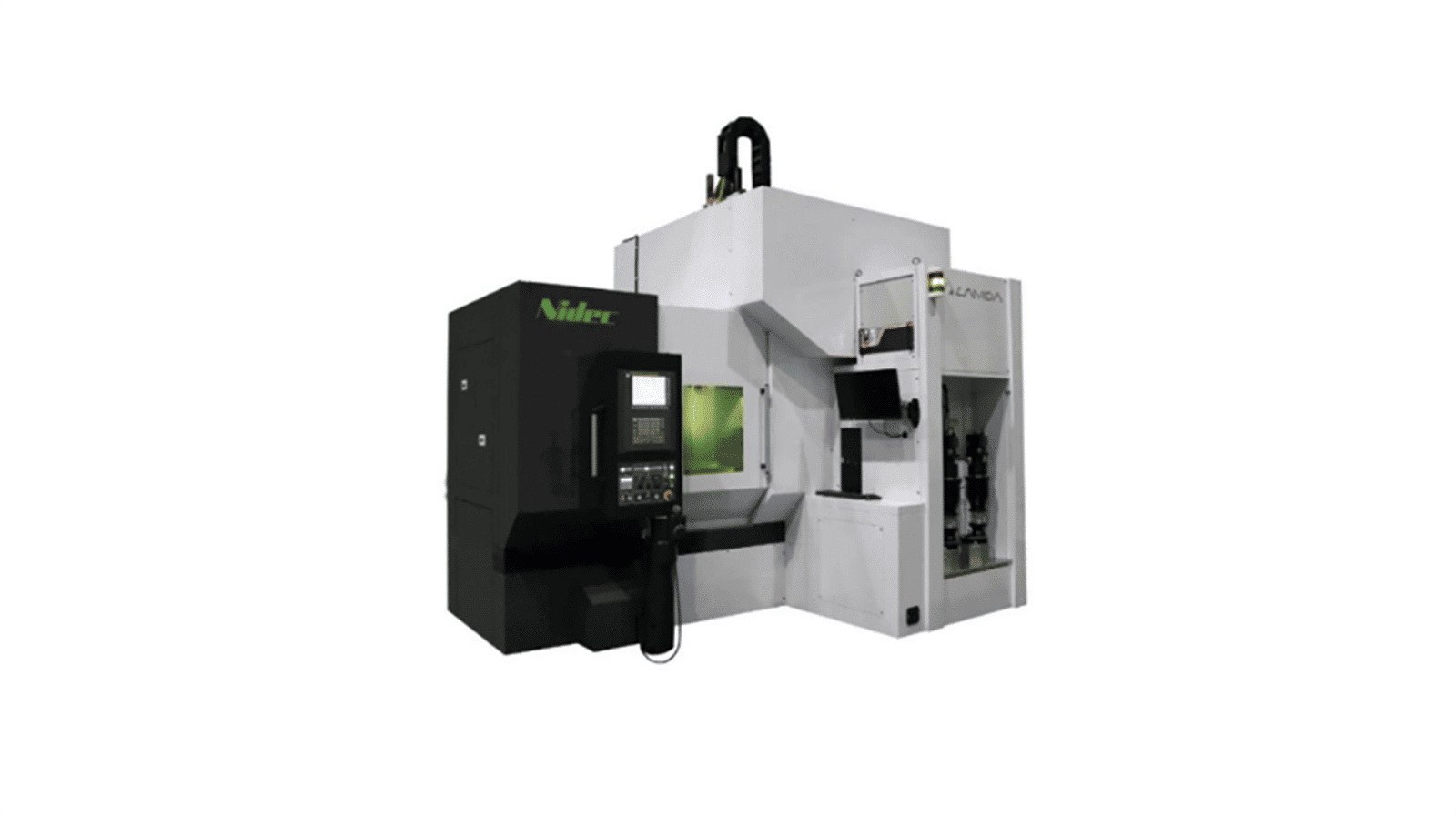
Nidec Machine Tool Equips LAMDA Series Metal 3D Printers With Autonomous Learning-Based Automatic Control System
Nidec Machine Tool Corp. has developed an Autonomous Learning-Based Automatic Control System for its LAMDA Series metal 3D printers. The system autonomously learns from changes in the build process and automatically adjusts process parameters as the part is built.
Combining a proprietary, patent-pending algorithm with image processing technology, the system adaptively controls laser power and travel speed in response to changes in thermal conditions and geometry during the build process. This adaptive control helps prevent build collapse, including in thin-walled structures and at toolpath intersections where heat accumulation can limit the effectiveness of conventional feedback methods such as PID control, Nidec said. The result is more stable builds and more efficient equipment operation.
The Autonomous Learning-Based Automatic Control System (patent pending) continuously learns in real time as the part is built, autonomously optimizing laser power and travel speed. Conventional open-loop control and PID control can experience build collapse in geometries prone to heat accumulation or in areas subject to rapid thermal changes, even after control gains have been adjusted. In contrast, the new system learns changes in the build state during fabrication and autonomously adjusts control conditions accordingly.
To enable accurate monitoring of build conditions, Nidec Machine Tool has also developed new image processing technology (patent pending). Using images captured by a coaxial camera, the technology accurately detects brightness, which correlates with the melt pool temperature, as well as the distance between the nozzle and the workpiece (work distance). The system uses this information to track changes in build conditions in real time and adjust laser power and travel speed accordingly.
By combining these two technologies, the system can autonomously adjust control conditions while learning the build state in real time, with the operator only needing to set baseline target values. This eliminates the need to collect and train the system on large volumes of data in advance, contributing to stable fabrication and improved equipment operating efficiency.