


TPS Highlights Latest Rotating Equipment Technology
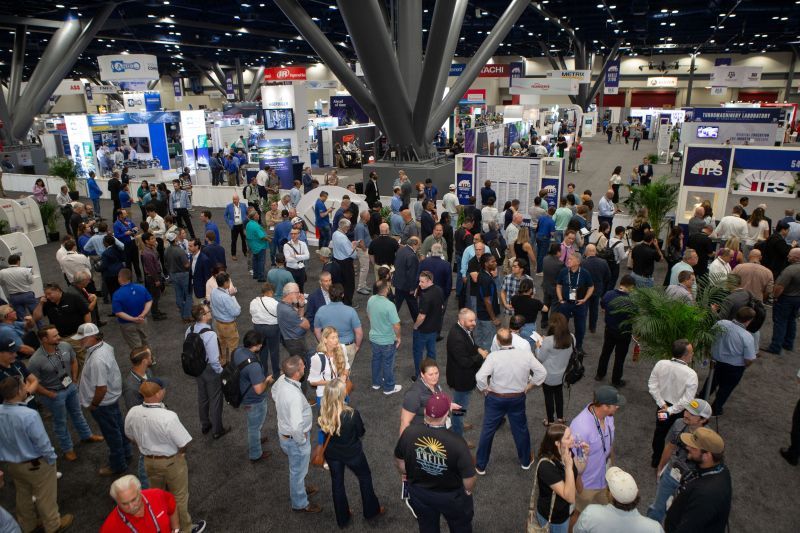
The 55th Turbomachinery & 42nd Pump Symposia (TPS) concluded in Houston, TX recently. Its wide reach and exceptional program further solidified TPS as a premier event in the rotating equipment industry, fostering meaningful exchanges among professionals and businesses alike in industries such as turbomachinery, pumps, oil & gas, petrochemical, power, aerospace, chemical and water/wastewater. Some show highlights:
Regal Rexnord presented its Powerlign 2.0, an updated torque monitoring system for turbomachinery applications. The updated system is designed to make installation and use simpler, while enabling more robust performance, better train efficiency and smarter maintenance planning.
Turbomachinery equipment end-users will find value in the long-term performance insights that Powerlign 2.0 enables, including fuel optimization, predictive maintenance, perfected cleaning schedules, real-time tuning and load balancing across compressor bodies, compliance with environmental regulations and emissions controls and validating driving and driven equipment performance upgrades.
“Powerlign is a high-precision, phase displacement torque monitoring system designed for continuous trending in demanding industrial environments,” said Chuck Sakers, director of engineering, high-performance couplings. “With Powerlign 2.0, we have delivered improvements that reflect nearly 30 years of customer feedback and field experience to provide a tool that supports smarter, data-driven decisions.”
Powerlign 2.0 is an add-on feature to industry-standard Kop-Flex and Ameridrives couplings and offers a more condensed installation, with dual sensor setup. It can also be retrofitted into existing systems subject to mass elastic data compliance. Existing guards can be modified for sensor installation, making it a cost-effective upgrade.
Trelleborg presented its XploR S-Seals designed for extreme pressure and temperature environments in static oil and gas applications. These seals use innovative, flexible anti-extrusion support elements in the corners to ensure robust, high-performance sealing in challenging energy application conditions. Leak-tight sealing is achieved by controlled deformation of the elastomer element. Extrusion resistance is provided by the specially designed springs that support the elastomer element yet are flexible enough to allow straightforward installation.