


A Conference Worth Crossing the Atlantic For
I went to the VDI International Conference on Gears in Garching in 2023. As an editor for Gear Technology, what stuck with me was not any single presentation per se, but how few Americans were there. AGMA was listed as an associated organization. Ahmet Kahraman from Ohio State sat on the program committee. There were American names on the schedule. But the actual turnout from our side was thin. The Europeans filled the place. So did the Japanese, the Chinese, the Koreans. It left me convinced that American engineers have a lot to gain from and contribute to these conversations.
I've thought about that a lot since. VDI conferences are, in my experience, among the most visionary gear-related events you can attend. So, I want to make a pitch for one coming up this summer that I think deserves real attention from American gear and drivetrain engineers: the 9th International VDI Conference on Powertrain Systems in Mobile Machines, June 30 through July 1 at the Kongresshaus in Baden-Baden, Germany. Simultaneous English interpretation runs throughout the conference, so language is not a barrier.
The two days are chaired by Prof. Dr. Ludger Frerichs of TU Braunschweig and cover process drives, traction drives, electric architectures, field experience with electrification, powertrain comparisons, and systemic developments. Before any of that, though, the conference opens with a plenary block that steps away from hardware entirely. Hans Uszkoreit from the German Research Center for Artificial Intelligence talks about what the AI revolution means for drive technology. Björn Conrad of Sinolytics gives what sounds like it will be a blunt assessment of Chinese competitive pressure. Robert Bosch's chief economist addresses how geopolitical disruption compounds the technological shifts already underway.
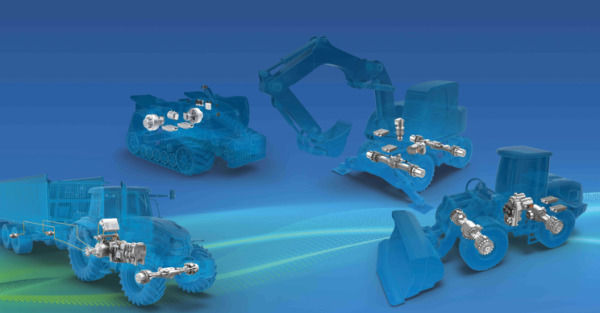
The technical sessions will be of particular interest to our readers. Antriebstechnik-Roth and Claas present a new powertrain for large square balers with a closed drivetrain, high power density, and fully controlled actuated gearboxes. Roth also covers a clutch-controlled CVT for fertilizer spreaders that achieves load-independent variability in a very compact package. This is serious mechanical drivetrain engineering. Nobody is talking about replacing gears here.
Lorenzo Serrao from Allison presents experimental results from a prototype dual-speed transmission designed for electric off-highway machines. He covers the shifting mechanism, the architecture, the lubrication, and the efficiency gains. If you have ever wondered whether electric drivetrains still need transmissions, this is the talk that will answer that question. AGCO's team walks through taking their E-Vario electrified tractor from prototype to production, and part of that story is explaining why they kept a transmission in a battery-electric platform. That one question alone is worth the trip for anyone in our business.
John Deere engineers from Cedar Falls and Waterloo present their drivetrain architecture for a battery-electric utility tractor, including novel torque-transmitting hardware and the NVH problems that come with electrified platforms. Deere is presenting this work in Germany because Baden-Baden is where the global off-highway drivetrain community gathers to push the field forward. FEV Europe and Yanmar add a case study on a 7-ton parallel-series hybrid wheel loader that cut fuel consumption by more than 30 percent. The hybrid space is where much of the near-term drivetrain work is going to live, and the mechanical content is substantial.