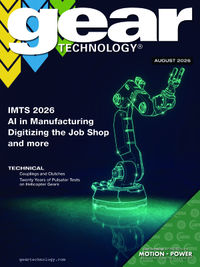
I’ve been rereading Self-Consuming Artifacts by Stanley Fish, published in 1972, a classic of literary criticism on the experience of reading, and now I see its central thesis everywhere. Fish argues that certain texts don’t deliver a meaning so much as put you through something. They build a framework, make you invest in it, and then show you its limits. The text, as he puts it, consumes itself: “it is self-sharpening and what it sharpens is you.” I realize this sounds like an odd thing to bring up in Gear Technology, but one hopes every issue of the magazine is in some way an active experience that requires the reader to work, question their own assumptions, and possibly change their perspective.

In early April, I had the honor of stepping into the role of President of the Motion + Power Manufacturers Alliance (MPMA). For nearly 25 years, I’ve had a front-row seat to this industry—learning from the engineers, executives, and innovators who make it run. That experience, built on relationships forged across every corner of the power transmission supply chain, is what I bring to this role.

This article demonstrates why bevel gears are designed with a zero sum of profile shifts—showing that independent shifts merely replicate what a modified pressure angle already achieves—and explains the practical benefits of using conical generating gears for tooth profile crowning.

An excerpt from Gear Technology Solutions by Dr. Hermann J. Stadtfeld exploring the mathematics behind conjugate bevel and hypoid gears—from the fundamental laws of gearing and the conditions for perfect conjugacy to why real-world power transmissions require deliberate crowning rather than theoretically exact conjugate designs.

Lance Brown spent 28 years at CGI, Inc.—a Carson City, Nevada-based manufacturer of precision drive systems founded in 1967 and best known for its work in medical robotics and aerospace, now part of The Timken Company—working his way from the shop floor into design engineering and tackling gear problems across some of the most demanding industries in the world. Now, as MPMA’s first Senior Technical Instructor, he’s channeling that experience into a growing education program at a pivotal moment for the organization. We sat down with Brown to talk about the career that got him here, what he’s seeing in the classroom, and where MPMA’s training offerings are headed next.

Every machine shop has a job nobody wants. The shop I worked in, you felt like you were being sent to “time out” if you had to go to the deburring station. At Productive Robotics’ Santa Barbara factory, where the company designs and builds its OB7 line of 7-axis collaborative robots, the robots they make do their own gear deburring.

Gear inspection and noise analysis are essential for ensuring quality and efficiency in modern gear manufacturing. Increasingly stringent requirements on dimensional tolerances—often in the micron range—and noise, vibration, and harshness (NVH) performance necessitate advanced measurement and evaluation methods.

Machines in paper/pulp applications are among the longest and most complex continuous manufacturing machines in the world—some stretch more than 300 yards. Maintaining precise speed ratios across dozens of shop machines is critical for operational success—even the slightest speed mismatch can cause the paper web to break, wrinkle, or stretch unevenly. Gearboxes (combined with variable speed drives) make this coordination possible.

Deciding to launch a new standards project is not a decision taken lightly here at the Motion Power Manufacturers Alliance (MPMA). If things go according to plan, a new project can take four years to reach publication over roughly 24 two-hour-long working group meetings. This is a significant commitment of time from both volunteers and staff. Additional time outside of meetings is often needed for reviewing drafts, responding to comments, and preparing materials, so careful thought goes into every new initiative before work begins.

MPMA has five emerging technology committees, each focused on a sector reshaping the gear and bearing industry. Across robotics, air mobility, electric vehicles, industrial connectivity, and additive manufacturing, the committees are studying technologies before they fully arrive, building expert networks, and translating what is happening at the frontier into intelligence that members can use. Here is where each stands as we head into the second quarter of 2026.

Modern cutting tools are almost always equipped with internal cooling channels. However, the longer the tool, the more demanding the drilling of these channels becomes. This is where a new generation of deep hole drilling solutions comes into play—combining precision, flexibility, and a high level of automation.

SMW Autoblok has recently introduced new long-stroke models to the MOTIACT lineup of mechatronic grippers. The MX-L 335 compact long-stroke and MX-L 520 long-stroke grippers are designed for EOAT (end-of-arm tooling) automation with higher workpiece weights and are suitable for use in machine tending, material handling, assembly, and other applications.
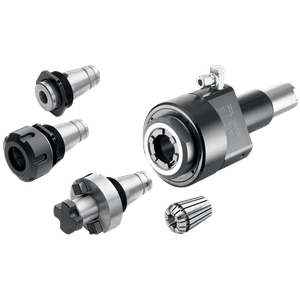
Heimatec recently announced the availability of its u-tec flexible changing system on all live tools in the company’s product line. Tools are now available for the most popular machine tool models in the market, according to Platinum Tooling Technologies Inc. President, Preben Hansen.

During rinsing, it is decided whether high-purity components reach the required cleanliness limits or whether recontamination after cleaning leads to scrap. Three factors are particularly critical: ultra-pure water quality directly at the point of use (particles, organics/TOC, conductivity, pH); minimal carryover between process stages and a clearly defined rinsing strategy; and plant engineering and loop hygiene (suitable materials, well-designed piping and continuous monitoring).

The DMU 65 H monoBLOCK 2. Generation from DMG Mori is a powerful, efficient, and universal 5-axis horizontal machining center creates all the conditions necessary for successful Machining Transformation (MX).
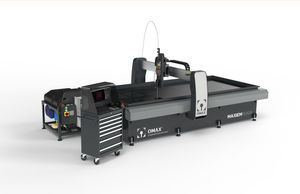
Hypertherm Associates will highlight its advanced plasma and abrasive waterjet cutting technology along with production-enhancing software at Fabtech Canada 2026, June 9-11, in Booth #7050 at the Toronto Congress Center.
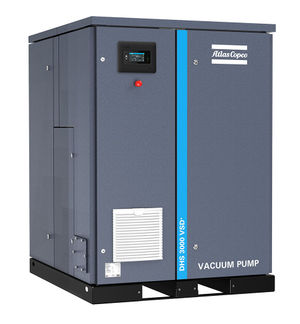
Atlas Copco developed the dry screw vacuum pump DHS 3000 VSD+ specifically for massive flow industrial applications. As dry technology, it is well suited for paper processing, conveying technologies, pick-and-place applications in the food industry, and as a central vacuum system. Powered by a highly efficient IE4 motor with a patented asymmetrical rotor design, users benefit from energy savings of up to 50 percent compared to competitive products. The low-maintenance, compact vacuum pump has a pleasantly low noise level and also runs vibration-free.

SMW Autoblok Corp. appointed Brandon Mathis as national sales manager. Mathis brings more than 16 years of experience in the machine tool and manufacturing technology industry, including nine years in sales leadership.
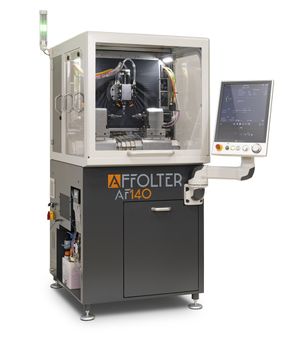
Affolter Group is investing in a major expansion and renovation of its headquarters in Valbirse (Grand Chasseral, canton of Bern, Switzerland). Construction has been under way since 2024 at the company’s site on Grand-Rue 74 and will continue through 2027.
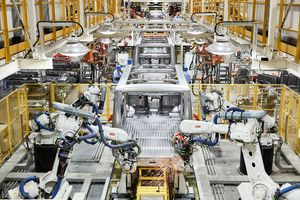
Automotive manufacturers worldwide are showing growing confidence in their ability to build electric vehicles efficiently and at scale, according to ABB Robotics’ latest Automotive Manufacturing Outlook Survey, as EV production becomes a more established and predictable manufacturing discipline.

Star SU, the marketing, sales and service affiliate of Star Cutter Company, announces the expansion of Rick Yan’s role. Yan, currently general manager of Star SU Tools and Machines in Shanghai, China, now also will serve as gear tools product manager for all domestic and international locations.

Nidec Machine Tool America is pleased to announce a joint Open House with Wenzel America this June, bringing together manufacturing leaders for two days of technical presentations, live demonstrations, and industry networking. The Gear Up for Precision Open House will spotlight Nidec’s latest advancements in gear manufacturing and its expanding portfolio of advanced manufacturing technologies, paired with live demonstrations of Wenzel’s high-precision metrology and CT scanning solutions.



Contact | Privacy Policy
©2026 Power Transmission Engineering