Detecting gear manufacturing deviations through advanced single-flank testing
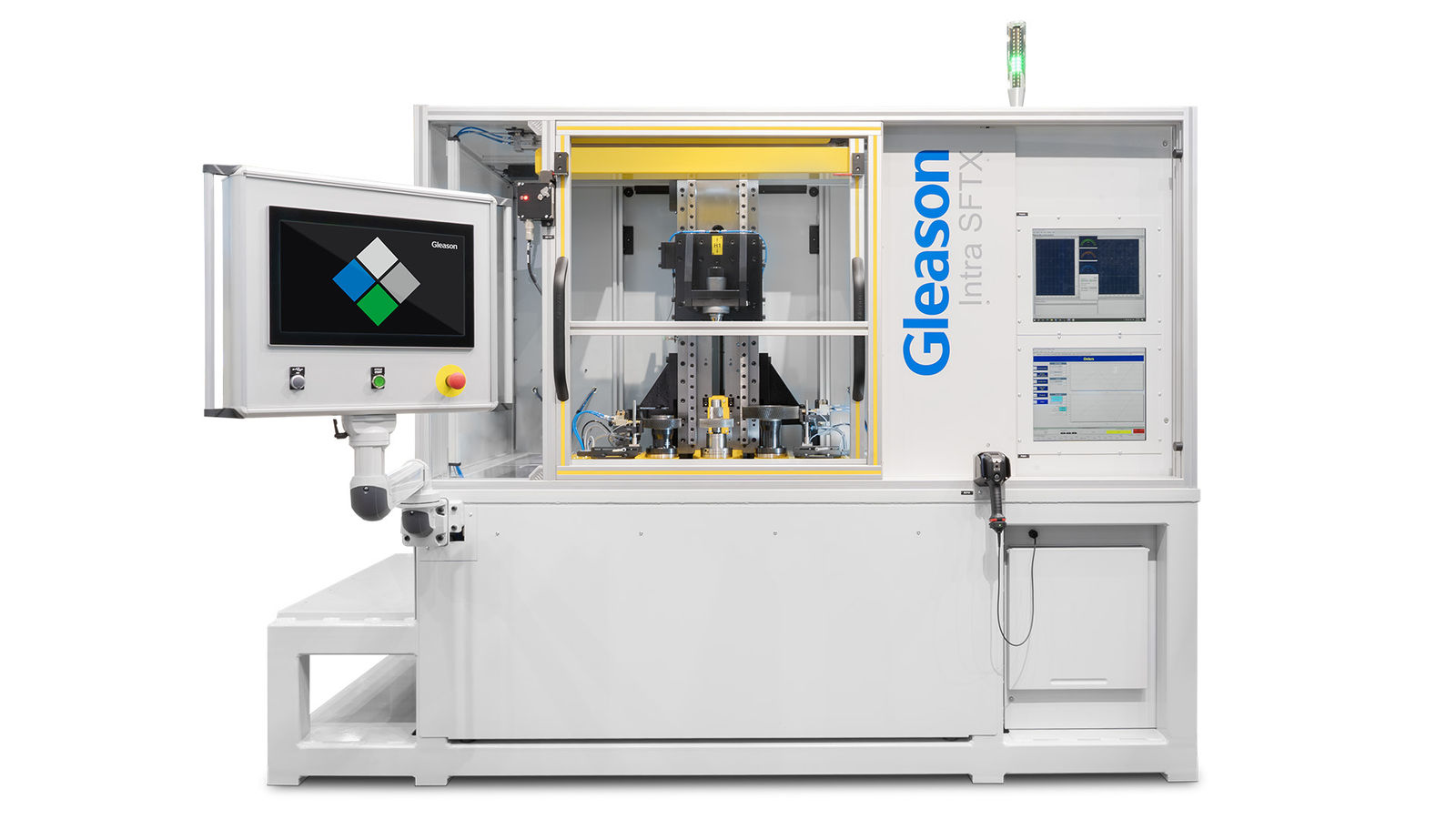
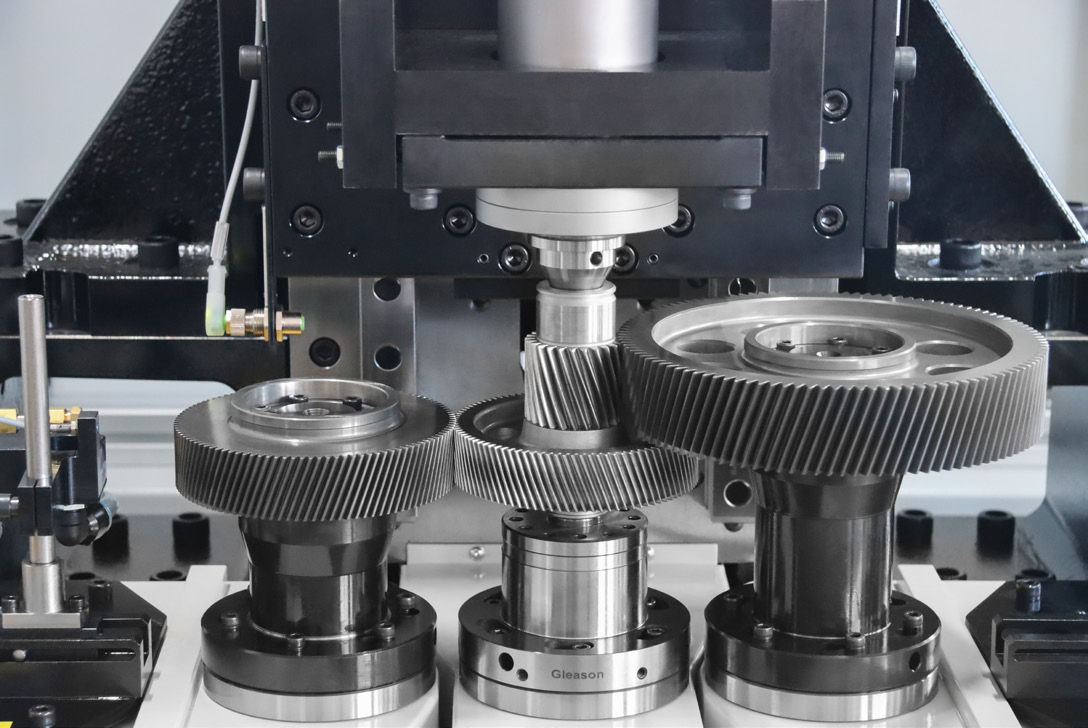
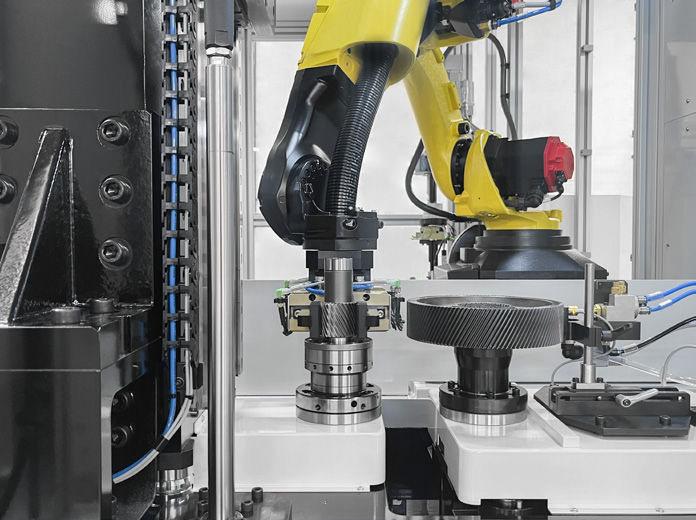
Gleason’s Intra SFTX Single-Flank Testing System with Twin Spindle for single or compound external gears. (All images: Gleason Corporation)
Gear inspection and noise analysis are essential for ensuring quality and efficiency in modern gear manufacturing. Increasingly stringent requirements on dimensional tolerances—often in the micron range—and noise, vibration, and harshness (NVH) performance necessitate advanced measurement and evaluation methods.
Recent developments in gear metrology include the integration of single-flank testing (SFT) technologies into broader measurement portfolios. Over the past two decades, multiple SFT system variants have been developed, with ongoing advancements focusing on expanded functionality, improved measurement resolution, and higher throughput in production environments.
SFT is widely used for both in-process and end-of-line inspection in high-volume gear manufacturing. The production environment presents challenges such as tight tolerances, process variability, and increasing NVH constraints. SFT methods address these by enabling continuous quality monitoring and providing real-time feedback on transmission behavior, supporting process control and optimization.
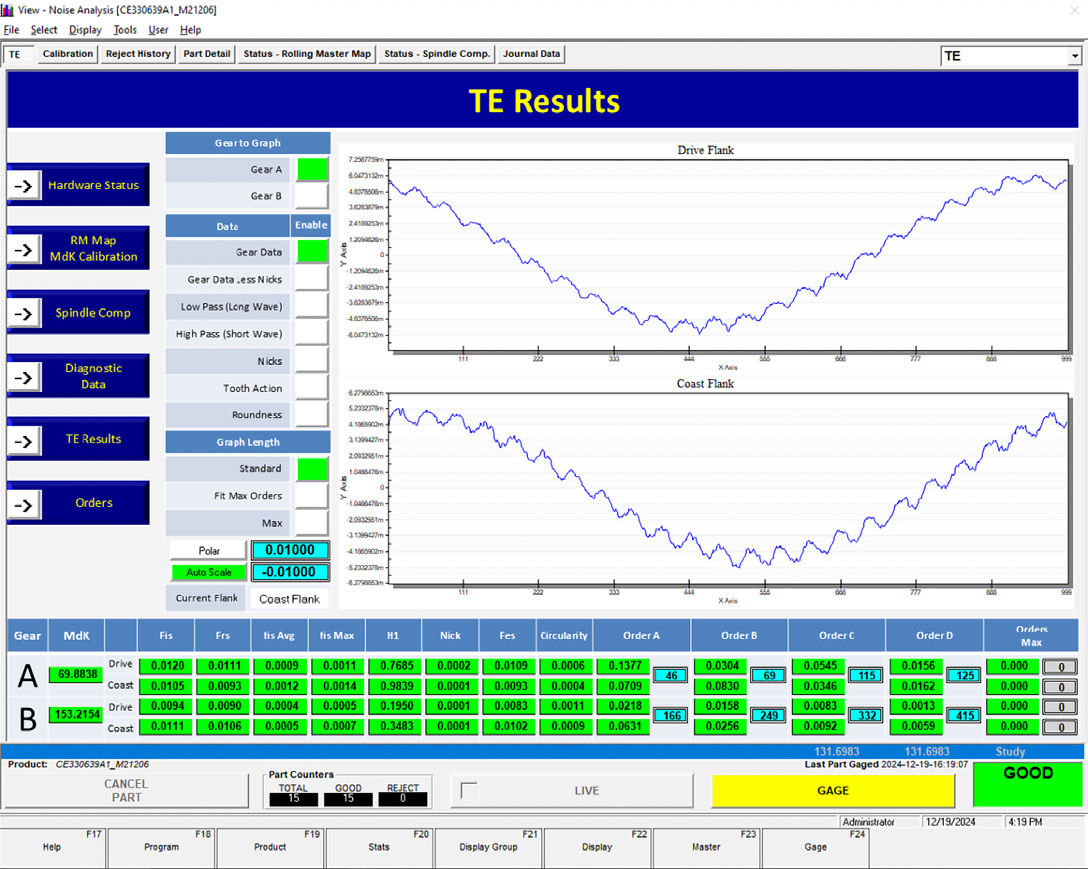
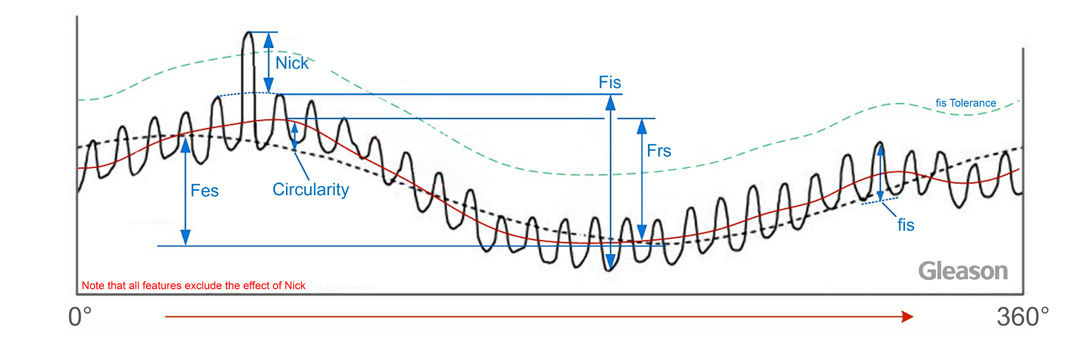
High-precision static and dynamic transmission error (TE) analysis.
SFT Technology
SFT systems have two independent onboard systems operating in concert with each other. Transmission Error (TE) measurement and Torsional Acceleration (TA) analysis.
The concept of transmission error (TE) measurement is to capture, with rotary encoders, the rotational geometrical deviations between two gears relative to an ideal rotation. The torsional acceleration (TA) measures the change in rotational speed over time (dynamics), often used to analyze gear meshing impacts and their noise behavior. TE represents the cause (real geometrical deviations), while TA shows the effect of such a TE at higher speeds and loads.
This TE technique is better suited to measure and detect lower-order errors such as: single-flank total composite action, single-flank tooth-tooth action, single-flank runout, single-flank circularity, and single-flank concentricity.
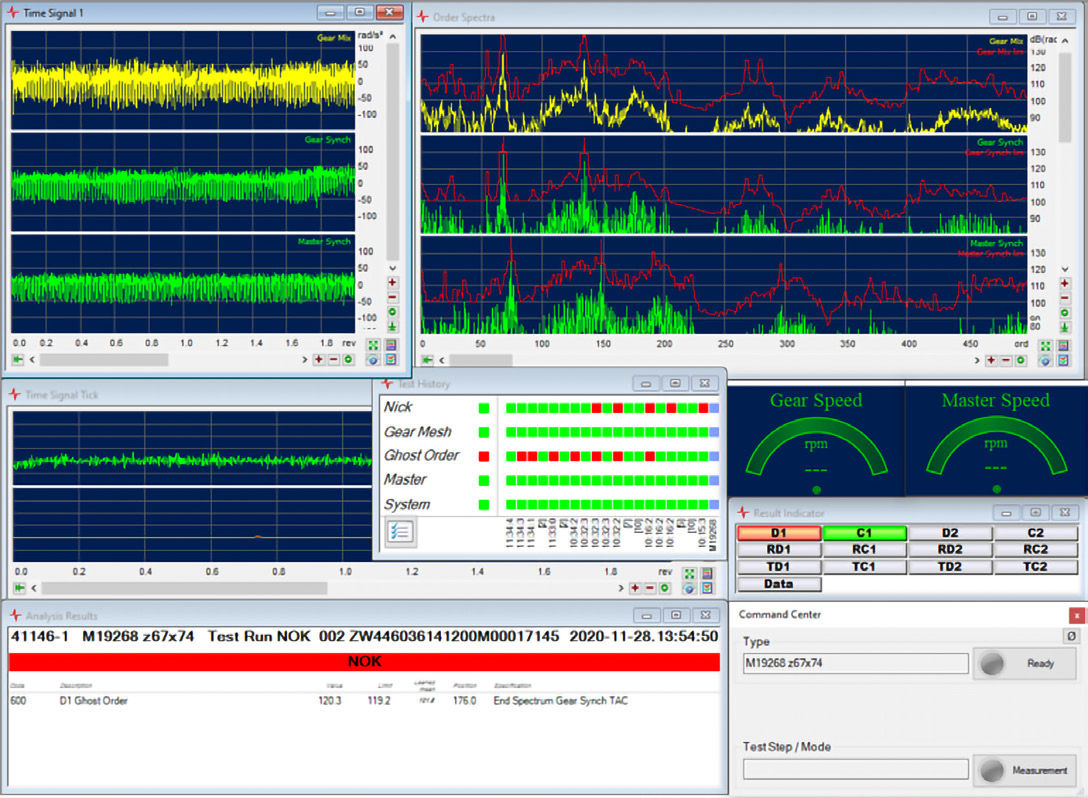
TA is to use a method of rotational synchronous time signals, with data collected from torsional accelerometers, to focus on NVH-related issues in the measured component. These errors can be time domain-based errors like nicks or gear modulation due to runout and circularity, and they can be order domain-based errors like gear mesh energies, side bands, and ghost orders. These order domain errors can occur on a sub-micron level.
How Single-Flank Technology Works
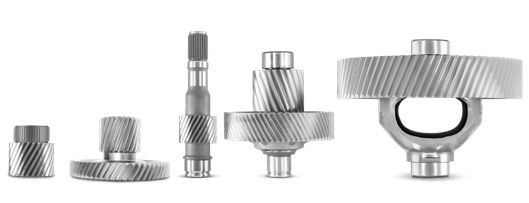
The Intra SFT Series by Gleason is designed to measure a wide range of drivetrain components.
Unlike double-flank inspection, where a component and master gear are engaged in tight mesh, single-flank testing uses a fixed operating center distance to ensure an appropriate amount of backlash is achieved in the system. This allows the tailored-designed master gear to roll with the component and provide results in the tangential plane, i.e., profile/involute errors, pitch errors, and total index errors. Under light load conditions, the onboard measurement systems will collect vibrational and angular irregularities during rotation, process, and display the result. Depending on the outcome of the part, a list of failure modes will provide important information for an engineer to review in the event that a machine correction is to be made. An additional benefit to single-flank inspection is the ability to measure the true accumulated pitch index, Fp, of the gear and understand how it may impact future sound quality.
The systems are equipped with high-precision instrumentation to ensure measurement accuracy and repeatability. Each machine incorporates precision spindles and application-specific master gears to support a range of gear configurations, including those used in electric vehicle drivetrains. Measurement of TE and TA is performed within a short cycle time, typically ≤35 seconds, enabling efficient evaluation of both quasi-static and dynamic gear behavior in production environments.
Torsional acceleration (TA) testing.
Challenges of Gear Alignment
SFT systems provide insightful data to the transmission designers as well as the final test and vehicle assembly departments, but the challenges of gear alignment remain largely unsolved. The SFTA system specializes in measuring match-set parallel-axis gear pairs without the use of a master gear. The SFTA system is integrated with an 8-Axis CNC-controlled pitch and angle function that can automatically adjust testing parameters with up to four degrees of offset face width. The machine is designed with a zero-point center distance function that allows for compatibility with almost all traditional, hybrid, and EV gearbox configurations.
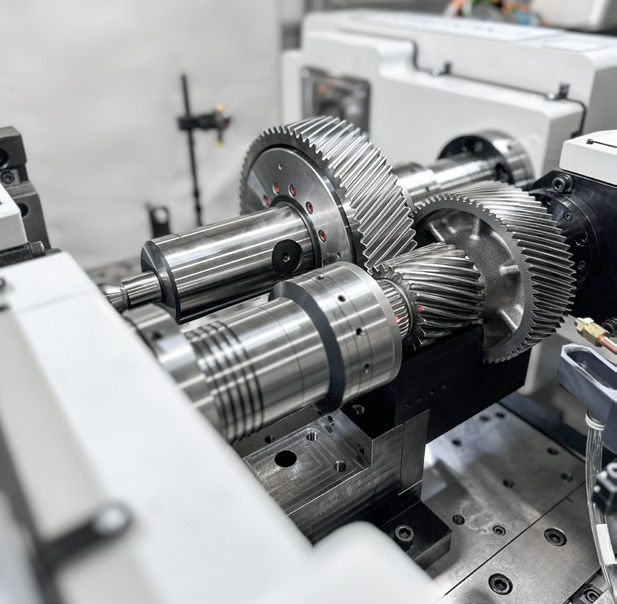
Gleason’s Intra SFTX with integrated axial alignment option delivers precise and repeatable measurement results for complex coaxial gearboxes with compound gears.Using Gleason’s Intra SFTA for detection of axial alignment challenges and direct component-to-component NVH testing.
SFT for Quiet Vehicle Cabins
Today’s vehicles require high torque gears and ultra-quiet interior cabins. Vehicle OEM’s are routinely optimizing gear microgeometry to ensure both performance and gear noise reduction. In our expert experience, we see that even with the most optimized designs, noise can find its way into the gear systems through the manufacturing processes. SFT provides a means to detect and quantify these deviations under conditions representative of functional operation. By correlating transmission error and torsional response with NVH-relevant characteristics, SFT enables identification of manufacturing-induced noise sources. Integration of SFT data into statistical process control (SPC) systems supports continuous monitoring and helps maintain consistent quality levels throughout production.
Real-time process control in early transmission design phases, providing a base for microgeometry development.
All Gleason Intra SFT Single Flank Testing Systems can be fully automated and seamlessly integrated into any manufacturing environment.
Conclusion
SFT provides a functional approach to gear evaluation by linking geometrical deviations with dynamic system response under operating conditions. Through the combined analysis of transmission error and torsional acceleration, SFT enables identification of both quasi-static deviations and NVH-relevant excitation mechanisms, supporting a more comprehensive understanding of gear performance.
In high-volume production environments, this capability allows earlier detection of manufacturing-induced deviations and facilitates closed-loop process control when integrated with statistical quality systems. As requirements for noise performance and efficiency continue to increase—particularly in electrified drivetrains—the importance of such functional measurement methods is expected to grow.
As an established supplier of gear manufacturing and metrology systems, Gleason contributes to the development and industrial implementation of SFT technology, true to its “Design-Manufacture-Measure” philosophy. By integrating SFT within a broader portfolio that includes design tools, manufacturing equipment, and inspection systems, a consistent link can be established between design intent, production processes, and measured performance. This system-level approach supports improved correlation between geometry, function, and NVH behavior across the entire gear development and production chain.