


Cobots That Deburr Their Own Gears
One collaborative robot manufacturer
put its own product to work on an in-house production bottleneck and cut scrap from 10 percent to under one percent
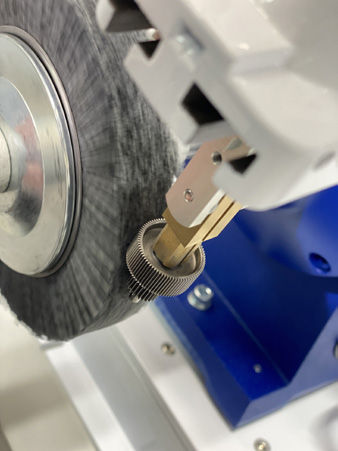
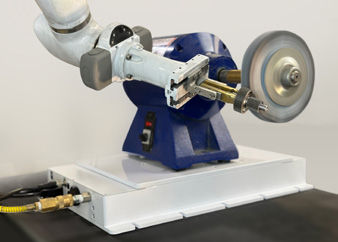
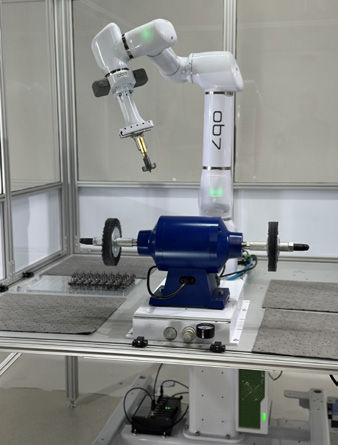
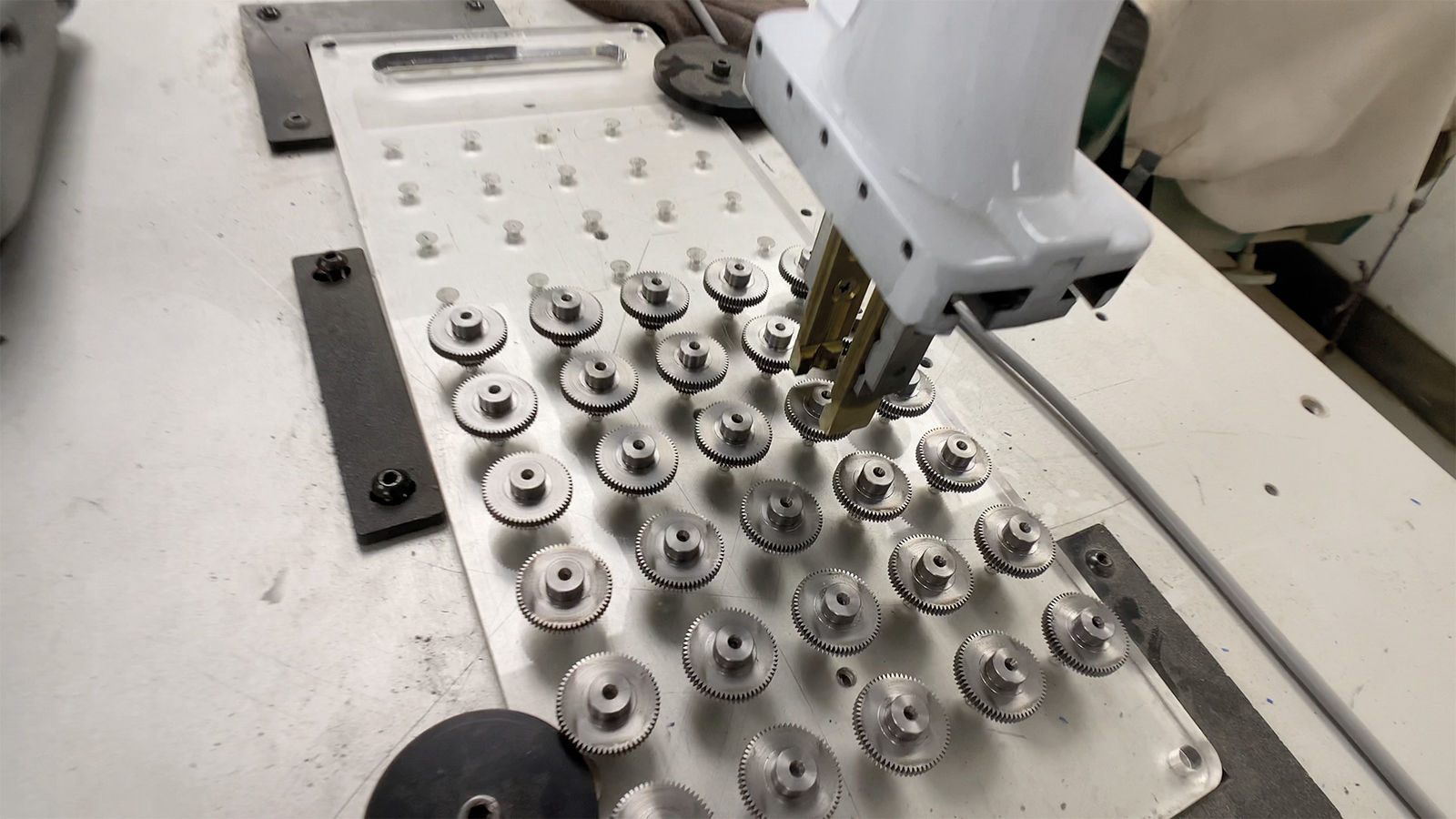
An OB7 cobot picks from a loaded tray of spur gears at Productive Robotics’ Santa Barbara factory. Each tray holds 30 to 50 parts, depending on size; the robot’s grid function interpolates every pickup position from four taught corner points. (All images: Productive Robotics)
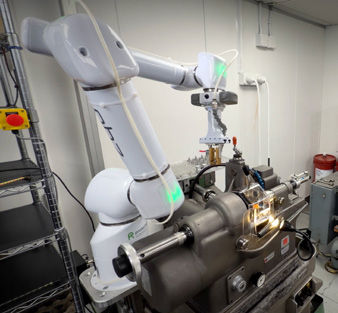
Every machine shop has a job nobody wants. The shop I worked in, you felt like you were being sent to “time out” if you had to go to the deburring station. At Productive Robotics’ Santa Barbara factory, where the company designs and builds its OB7 line of 7-axis collaborative robots, the robots they make do their own gear deburring.
Each OB7 ships with roughly 49 gears across its seven joints. They’re basic spur gears, but precise ones—AGMA Class 12 on average, with motor pinions reaching Class 14. The material is nitroloy at about 28 Rockwell, which production manager Troy Kirby says behaves like hard stainless under an abrasive wheel. For years, finishing those gears meant operators standing at the bench, pressing parts by hand.
“I’ve spent thousands of hours behind the deburring wheel, unfortunately,” Kirby said during a recent Gear Technology webinar. “People just don’t like to deburr.”
Kirby’s gear career goes back to 1984, managing a Santa Barbara machine shop that built hydraulic undersea manipulators and rack-and-pinion actuators for the U.S. Navy. He earned the Navy’s Reliability, Maintainability, and Quality Assurance Award in 1991 on a NASA project, then ran his own machining and gear manufacturing company until selling it in 2016. He joined Productive Robotics the next year to modernize their internal gear production. Once that was done, he turned to the problem everyone could see: thousands of parts piling up on the deburring bench.
Where the Line Backed Up
Gear cutting wasn’t the issue. The company’s shapers and hobbers kept pace with demand. The trouble started after—as OB7 sales grew, so did the backlog of parts waiting for manual finishing.