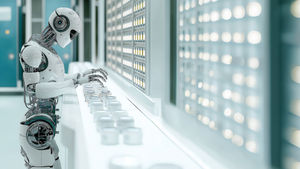
With the development of AI and powerful computer algorithms, is the future of humanoid robotics now? The reality is that safety at speed, reliability and cost for electromechanical actuation still represent a significant challenge that limits the near-future commercial deployment of humanoids. In 1973, Ichiro Kato et al. at Waseda University developed WABOT-1. WABOT-1 could recognize and manipulate objects, speak and walk. In 1996, Honda developed the more advanced P2 Asimo humanoid robot. Honda’s humanoid launched the development of the first harmonic drives to minimize backlash and turn small electric motors into high-torque actuators for a stable walking biped. Honda’s robot had six-axis force/torque sensors and encoders that constitute today’s humanoid hardware.

Gear backlash refers to the clearance, or play, between the teeth of gears in a mechanical transmission system. Gear designers have strived to minimize gearing systems’ backlash due to the impact on precision, efficiency, noise, vibrations, wear, motion control, system complexity, and safety. Their significance varies depending on the applications, but designers need to carefully consider these factors when developing robotics systems to ensure they meet the desired performance and safety standards.



Contact | Privacy Policy
©2026 Power Transmission Engineering