The Near Future of Mechanical Drive for Humanoid Robots
AI has moved humanoid robots forward, but safety, reliability and cost in the actuator drivetrain still stand in the way of commercial deployment
Note: Since this white paper on the near future of mechanical drive for humanoids was first published last year by the MPMA Emerging Technology Robotics Committee, we have seen progress toward lighter polymer gears and more adaptable robotic gearboxes. The recent improvements in AI have surpassed expectations by providing greater adaptive decision-making and control. However, there is still innovation required to improve the safety, reliability and cost-effectiveness of mechanical drives for humanoids. This shall remain a challenge and priority.
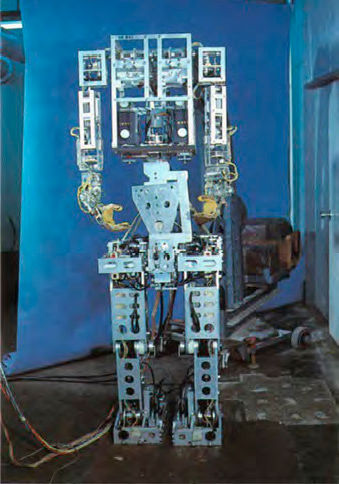
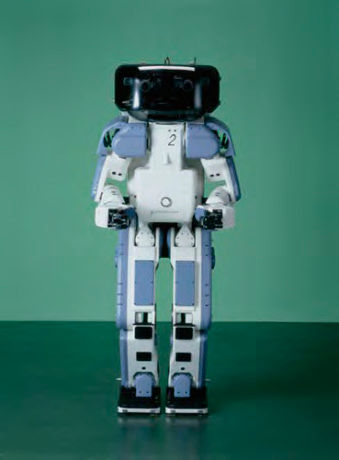
With the development of AI and powerful computer algorithms, is the future of humanoid robotics now? The reality is that safety at speed, reliability and cost for electromechanical actuation still represent a significant challenge that limits the near-future commercial deployment of humanoids. In 1973, Ichiro Kato et al. at Waseda University developed WABOT-1. WABOT-1 could recognize and manipulate objects, speak and walk. In 1996, Honda developed the more advanced P2 Asimo humanoid robot. Honda’s humanoid launched the development of the first harmonic drives to minimize backlash and turn small electric motors into high-torque actuators for a stable walking biped. Honda’s robot had six-axis force/torque sensors and encoders that constitute today’s humanoid hardware.
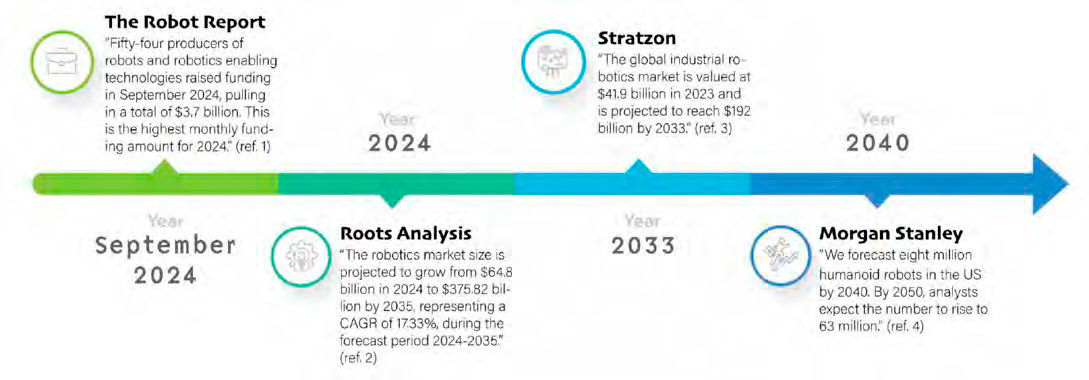
Humanoid robots have been around for decades, but few have moved beyond laboratory development and robotics conferences. The 2024 headlines from market reports suggest otherwise and have raised the interest of numerous investors and corporate boards of directors (see Figure 3). This surge in interest in robotics is driven by the convergence of advanced AI, machine learning, computer vision and control algorithms that were not present in the Honda P2 Asimo humanoid. This has generated much enthusiasm and the promise that we are at the tipping point of a new technological era for humanoid robotics. Are we at the technological tipping point for humanoids, or are other developments still needed to meet the market forecasts?
The experts are not convinced. Rodney Brooks, professor of robotics (emeritus) at MIT, co-founder and chief technical officer of Robust.AI, is more cautious in predicting the future of humanoid robots, as he explained during the 2024 RoboBusiness Conference. Brooks highlighted that robots are subject to external forces in the real world and in their interactions with humans, who are very variable in their behavior. Demonstrating success in controlled settings, such as in laboratories, is very different from getting consistent results for the customer, where there is far more uncertainty.
This is where the real challenges arise in robotics. Dave Coleman, chief product officer at PickNik, which develops advanced robotics software applications, said in a similar assessment that the most common reason that robotics companies fail is that they underestimate the complexity of robotics (Ref. 4).
The MPMA Emerging Technology Robotics Committee reviewed these recent developments and the design and manufacturing impact on gears, drives and mechatronic actuation systems for humanoids. We looked at the contextual differences between humanoid and industrial robotics, the physical (electromechanical) and semantic (software and AI) safety and reliability challenges, attributes to consider for rotary actuator mechanical drive actuation, and finally, what emerging technologies the industry should consider for future humanoid actuator solutions to support large-scale deployment of safe humanoids.
Figure 1—WABOT-1 (1973). (Image: Courtesy of Humanoid Robotics Institute, Wasada University)Figure 2—Honda P2 (1996). (Image: Courtesy of Humanoid Robotics Institute, Wasada University)
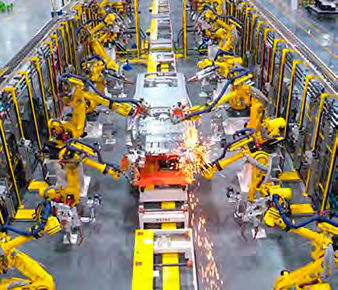
Industrial robots are automated machines that perform repetitive and, oftentimes, dangerous tasks in factories and warehouses. These tasks may include welding, gluing, inspection, assembly, disassembly, packaging and labeling, palletizing, and material handling.
These industrial robots are large, heavy machines that are often placed in fixed and fenced positions within a plant and have a high degree of precision and endurance. Repetitive tasks and controlled environments allow for sensors to communicate data that helps reliably predict operational performance. Some top industrial robotic companies include ABB, Fanuc, Kuka, and Yaskawa. These companies’ industrial robots can be found in thousands of facilities worldwide and together they command roughly 75 percent of the market for robotics. Fanuc Corp. develops health usage monitoring and predictive maintenance programs such as Fanuc’s ZDT (zero downtime) and FIELD systems. These systems help improve robot performance and safety and eliminate downtime. ZDT connects robots to the Ethernet to create a centralized management system that can check the mechanical condition of robots and provide preventive maintenance diagnosis information.
Figure 3—Financial headlines on humanoids.
It is common in industrial robotics to use harmonic drives, also known as a strain wave gear, that utilize an elliptically shaped component called a “wave generator” to deform a flexible spline, allowing for high torque transmission with minimal backlash and precise rotational movement. High gear ratios ranging from 100:1 to 300:1 minimize intrinsic gearbox backlash. The high-speed deterministic trajectory and position control, close to 0.02 mm at high velocity, do not require low mechanical impedance or backdrivability, as discussed in the MPMA Emerging Technology Committee white paper Robotics and Gear Backlash (Ref. 5), published in February 2024.
Humanoid robots are not as clearly defined. Traditionally, they have been defined as robots that have a human-like shape or, according to the Oxford Dictionary, as robots with a human appearance. Our research has demonstrated that a consensus is building to define humanoids more broadly, using the three categories of environment of operations, capabilities and user interface.
Environments
Predetermined with no human interaction (examples: warehouse, deep-sea mining).
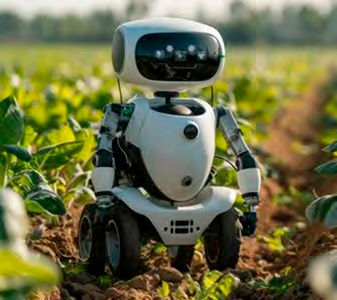
Hybrid with colocation and minimal interaction (manufacturing assembly line, farming field, package delivery).
Dynamic with complete human interaction (home, assisted living residence, school, hospital).
[advertisement]
Capabilities
Locomotion (wheeled, legged, tracked) on various terrains.
Manipulation with passive and active end-effectors.
Communication and interaction with humans through speech, gesture and facial expression.
Assisted or autonomous navigation mechanically guided, non-contact guidance, visual and GPS.
Based on the above definitions, humanoids should not be restricted to human likeness or shape but much broader in scope. Because of the many variables that humanoids encounter, considerations for mechanical actuation design, construction, operation and maintenance of humanoids are tenfold greater than industrial robots.
Humanoids experts assembled at the November 2024 IEEE-RAS International Conference on Humanoid Robots in Nancy, France, recognized that one of the most significant obstacles to full industrialization of humanoids is safety. Safety is crucial in humanoid robots because they are designed to interact closely with humans, meaning any malfunction or unexpected behavior could potentially lead to serious injury, making it essential to implement robust safety features to protect both the user and the surrounding environment when working with humanoids, including collision avoidance, force limitations and clear communication of robot actions to prevent accidents and build trust in human-robot interactions. As Aaron Prather (director, Robotics & Autonomous Systems Programs, ASTM) mentioned, “Considering that hundreds of operation and design standards and requirements already exist, from ANSI, UL, ASTM, IEEE, ISO, OSHA, and U.S. Consumer Product Safety, safety is not only design critical, but also hugely complex to manage.”
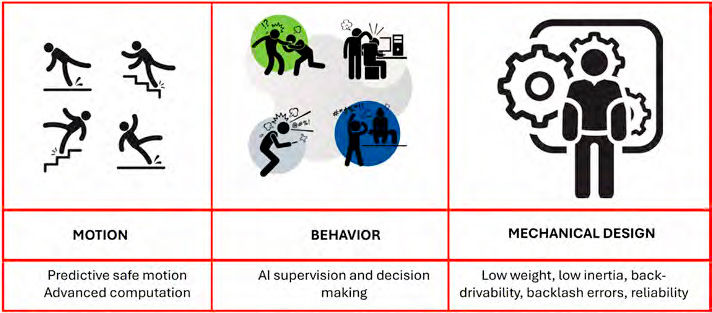
Figure 7—Humanoid failure categories.
Safety considerations for humanoids should encompass not only functional safety (tip-over, breakage, electrocution, fire, hazardous and toxic materials, etc.), but also physical movements. As such, we could consider three categories of failure in humanoids: motion, behavior and mechanical design (see Figure 7).As motion and behavior fall primarily within the semantic safety domain, developments in artificial intelligence supervision, more advanced computational models, and predictive safe motion have provided significant improvement for these two categories. Mechanical design will be our primary focus.
The mechanical design category consists primarily of actuation, including motor, gearbox, reducer, coupling, brake, sensors, wires and connectors, and the following elements shall be optimized for safety:
Weight reduction to minimize impact on falling, reduce energy requirements, reduce torque and force momentum, and reduce metallurgical component fatigue.
Lower inertia allows for faster acceleration and deceleration, enabling quicker response times, improved agility, and more precise control. A robot with lower inertia can start, make emergency stops, and change direction more quickly due to its reduced resistance to changes in motion.
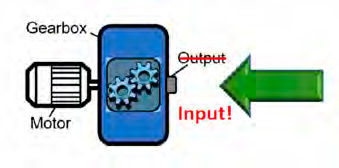
Backdrivability for accurate position control ensures that the robot operates within its defined workspace and avoids collisions or accidents. As such, backdrivability (i.e., a low-impedance system) is essential for mechanical compliance to be driven from the load side, managing contact with humans and undefined objects (Figure 8, Refs. 5 & 6). The backdrivability is characterized by its mechanical impedance consisting of the gearbox inertia, stiffness, and losses due to backlash and friction.
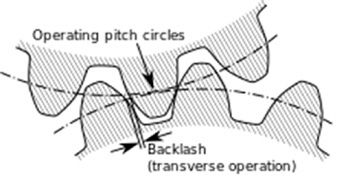
Backlash error refers to the gear clearance or play between the teeth of gears in a mechanical transmission system (see Figure 9). Excessive backlash can lead to inaccuracies in positioning and reduced repeatability. Backlash can contribute to oscillations and vibrations in the robotic system, especially when the robot changes direction or stops and starts suddenly. These vibrations can affect the overall stability of the system, create wear, and affect the reliability of the drive system. For humanoids, the close interaction between robots and humans requires low forces when there is a deviation from the position trajectory. Therefore, they require low mechanical impedance, or backdrivability, and a low gear ratio for safety reasons. With a lower gear ratio, the backlash errors become more predominant. Even a small amount of play between gear teeth will result in a larger noticeable movement at the output due to the increased mechanical advantage provided by the low ratio, leading to decreased precision and safety issues.
The second element necessary for successful commercialization of humanoids is reliability. Brandon DeHart (RoboHub manager and adjunct assistant professor, Faculty of Engineering, University of Waterloo) knows about humanoid reliability. The RoboHub hosts a fleet of more than 70 robots consisting of fixed-base, walking, rolling and flying robots, including a full-size humanoid. The RoboHub is a real-life setting for humanoids. DeHart commented that physical intelligence is one of the greatest challenges and limitations they see every day in their laboratory. Pins get broken, and motors, bearings and gear trains fail regularly. Lubrication changes over time. The impact that robots encounter in everyday use is much higher than designers anticipated, particularly on hips, knees and elbows. Predicting failures such as tipping over or uncontrolled movement when humanoids interact with the public is also challenging. The unpredictable failure of hardware is a prime consideration for safety reasons, but operational profitability and return on investment must also be taken into consideration.
The third element for successful commercialization is one that is significant for investors and corporations, and that is the cost of humanoids. Robots vary significantly based on their design, materials, type of sensors/navigation system, processing power, and actuators, with prices for commercial robots ranging from $10,000 to $100,000, and advanced models for research exceeding $200,000. Factory automation, where humanoids interact with industrial robots, will likely be the initial application of humanoids since they would be deployed in a predetermined hybrid environment with trained users. For continuous operations in the current state of the industry, a business is likely to need up to 3:1 robot ratio for each application: one working, one charging, and one undergoing maintenance due to reliability. Adding support technicians, spare parts, maintenance crews, and networking IT systems, the return on investment will be difficult to justify unless the price is closer to the $2,500–$10,000 range.
Humanoid Actuator Mechanical Drives
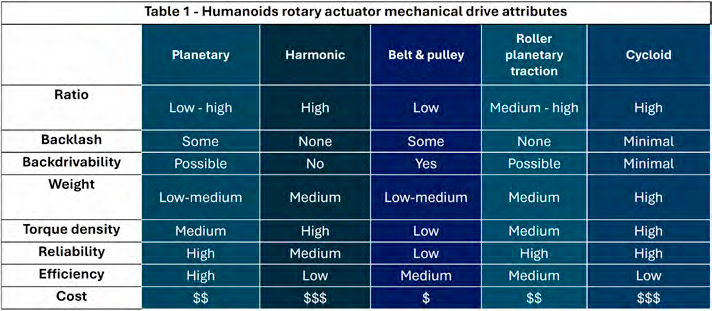
Rotary joints are the most common type in humanoid robots, in ways that replicate the human motion of ankles, knees, hips, shoulders, elbows and wrists. We looked at five types of mechanical drives that have been used and conducted a multi-attribute value assessment. The evaluation below in Table 1 is not absolute and depends on the robot’s task and factors like operational environment, speed and load capacity, required accuracy, and cost target. These would determine the best mechanical drive choice. Further descriptions of each mechanical drive technology can be found in the February 2024 AGMA Emerging Technology Committee white paper, Robotics and Gear Backlash (Ref. 6).
Emerging Technologies to Support Future Humanoid Actuation Systems
The following five technologies show promise for further development and their combination represents potential for the next generation of humanoid actuation gear technology.
Plastic Gears
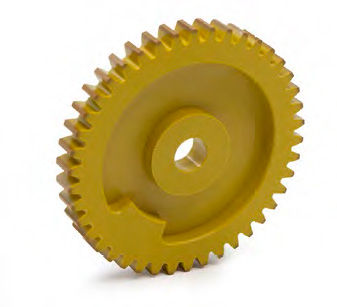
Some of the most innovative gears today are machined from advanced engineering plastics. According to Eric Wiita at Victrex, some of the key benefits of plastic gears include reduced weight and lower inertia up to 70 percent, the ability to absorb shock and vibration due to the elasticity of the material, reduced noise, low coefficient of friction, and, in most cases, the ability to self-lubricate. Plastic gears also provide flexibility of design, with the injection molding process maximizing flexibility, enabling complex shapes, intricate geometries, and weight-reduction cavities.
However, as Borut Cerne (co-founder and CEO at RD Motion) highlighted in Material Communication Today (Ref. 9), to ensure the gearbox achieves its required lifespan, plastic gears must be meticulously designed, accounting for all potential failure modes under specified operating conditions.
Reliable gear design hinges on precise, gear-specific data about the material’s wear behavior (wear factors) and fatigue performance (S-N curves), enabling optimal material utilization while minimizing the risk of failure. However, the analytical description of the thermomechanical behavior of thermoplastic gears while running is very problematic due to the transient nature of the process and the phenomenological behavior of thermoplastic materials. As has been shown in numerous works, these materials exhibit markedly time/rate-dependent, in many cases nonlinear, mechanical behavior, which is also highly dependent on the material’s temperature. These characteristics, along with geometric tolerance deviations that are detectable on the gears, can lead to substantial deviations from the expected theoretical gear meshing kinematics. These deviations can result in increased contact loads, in terms of leading to higher generated frictional heat and accelerated failure of these components. Considering many advantages of plastic gears for humanoid actuation systems, it remains of paramount importance to study in detail the nonlinear, temperature-dependent properties of the thermoplastics used for gear applications, as well as the effects that these properties have on the gear meshing process and resulting frictional heat.
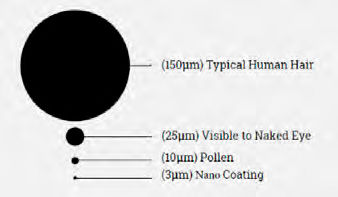
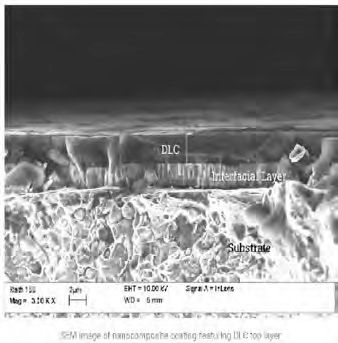
Nanocomposite coating technology is a process that involves applying a thin layer of material to a surface to improve its properties or give it new functionality. The layer is typically 3 to 5 nanometers thick, about 30 times smaller than a human hair (see Figure 11). Nanocomposite coatings can be applied through Physical Vapor Deposition (PVD), Plasma Enhanced Chemical Vapor Deposition (PECVD), or hybrid form (PVD + PECVD). A scanning electron microscope (SEM) micrograph of nanocomposite coating layers is shown in Figure 12. Currently, nanocomposite coating can be used on engineered alloy gears such as alloy steel, stainless steel, aluminum, bronze, powdered metals and tungsten carbide ceramics. On metallic engineered alloy gears, Aaron Byrum of United Protective Technologies (UPT), mentioned that a nanocomposite coating, when applied to a gear made from traditional materials, can provide multiple improvements, like reduced friction, which leads to reduced heat generation, minimized wear, lower lubrication dependency, and increased efficiency of the power transmission system. Additionally, a nanocomposite coating may also increase allowable contact stress as presented by Peter Schmidt at the recent 2024 AGMA Fall Technical Meeting (Ref. 10). All these improved characteristics can result in a more reliable and predictable mechanical system.
Integrated Actuation System With Low Gear Ratio Planetary
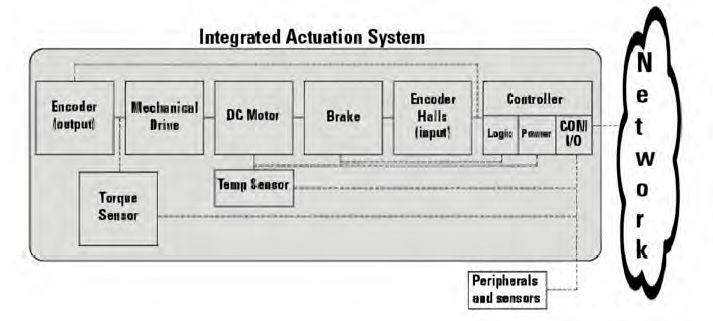
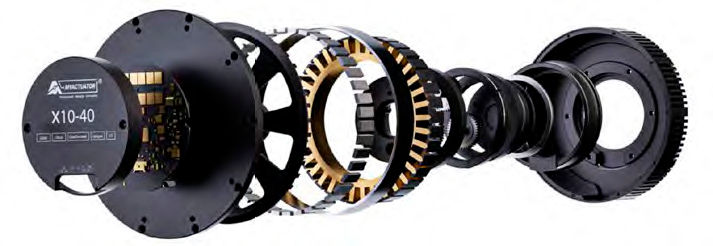
Actuators for humanoids must integrate many elements as shown in Figure 13 below. With humanoid design focusing on very compact packaging and cost, traditional separate subsystem designs can be expensive and difficult to manage. Having integrated solutions allows maximum cost efficiency and compactness. The additional output encoder allows compensation for gear backlash that may result in a different load position on the output side, causing delays and oscillations at the start or stop of the movement. New solutions are emerging from MyActuation (Figure 14) and Synapticon with integrated actuators that offer planetary gearmotors with high power/current density, compact form factor, integrated high-resolution encoders, integrated brake systems, highly optimized mechanics and thermals, and more. The integrated planetary gears allow for low gear ratio and focus on cost efficiency while still delivering necessary performance in this space. For humanoids, where there is a need to actuate multiple axes, integrated design of motor and reducer on one level with sensors and controllers offers the possibility for low weight, compact actuation with cost suitable for large-scale industrialization.
Contributors
Special thanks to the following contributors to this article (in alphabetical order):
Rodney Brooks, Founder and CTO, Robust AI
Aaron Byrum, Sales Engineer, United Protective Technologies
Borut Cerne, Co-founder and CEO at RD Motion
Brandon DeHart, RoboHub Manager and Adjunct Assistant Professor, Faculty of Engineering, University of Waterloo
Mary Ellen Doran, Vice President, Emerging Technology Executive Director, AGMA Foundation
Linda Lemire, Principal, Eye 4 Editing
Pablo Lopez Garcia, Robotics & Multibody Mechanics Group - Vrije Universiteit Brussel
Mike Greenwald, VP of Engineering, United Protective Technologies
Robert Kufner, President and CEO, Designatronics Inc.
Aaron Prather, Director, Robotics & Autonomous Systems Programs ASTM
Mina Spasojevic, Technical Business Developer, Synapticon Integrated Motion
Cheng-Yueh Liu, Department of Mechanical and Mechatronics Engineering, The University of Auckland.
John Tuohy, Business Development Manager at RoboDrill Fanuc
Thibaud Verschoor, Co-founder and Head of Product - Innovative Mechatronics Systems B.V.
Eric Wiita, Business Development Manager, Victrex USA, Inc.
Affordable Mechanical Joint
Mass market appeal demands functional yet affordable solutions for robotics. This involves prioritizing key functionalities over desirable attributes with respect to cost. The alternative to pursuing complex over-engineered outcomes is simple solutions that achieve functional requirements that are more likely to be compact and cost-effective.
Take, for example, a humanoid robot knee joint. The archetypal implementation would maximize torque with potentially large and heavy actuation. However, careful consideration of a passively inspired walking gait would identify that the shank, which can be lightweight, merely needs to swing at the knee. This prevents foot scuffing during walking. Shanks can support upper body mass if knee joints are lockable. Impetus for forward motion could be provided by powered ankles, or by dynamically moving the robot’s center of gravity forward.
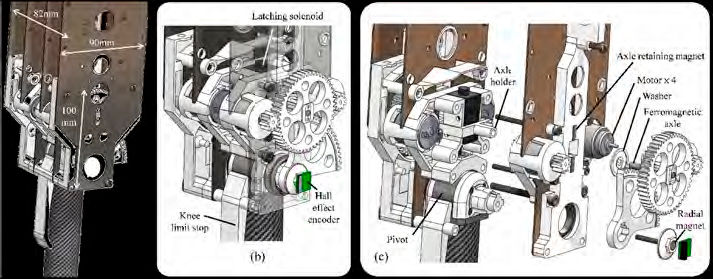
One solution proposed by Cheng-Yueh Liu et al. (Ref. 8) revolves around a compact planetary gearbox, which doubles as a clutch (Figure 15). A pair of small, low-power DC motors rotate a compound sun gear as part of a speed reduction transmission. The central sun gear is free to translate vertically by a lateral displacement marginally greater than the gear tooth depth. This facilitates compound sun gear decoupling from the output gear set. Such functionality is permitted by contra-rotating the two planet motors in opposite directions. Retaining the sun gear axle in the up or down position enables transmission disengagement or engagement, respectively. An independent solenoid can lock the knee joint when required. All necessary modes of operation for a basic knee joint are achieved by simplifying requirements to achieve balanced outcomes. Redefining research-oriented robotics with this mindset offers endless possibilities to realize commercially viable humanoids.
Nanocomposite Coating and Plastic Gears
As we discussed above, the benefits of plastic gears are limited by the transient nature of the thermomechanical behavior and strength of polymers. Could plastic gears be nanocomposite-coated to create lightweight, complex, and thermally stable gears? If so, humanoids actuation systems, typically reserved for metal gears, could be designed with nanocomposite-coated plastic gears and provide the desired affordability, strength, reliability, and weight reduction.
Figure 11—Relative size comparison of nanocoating. (Image: United Protective Technologies)Figure 12—SEM micrograph of nanocomposite coating layers. (Image: United Protective Technologies)
We asked Mike Greenwald, vice president of engineering at UPT, if PEEK (polyetheretherketone) thermoplastic, which is often considered a suitable replacement for metal gears for its strength and high temperature capabilities, could benefit from a nanocomposite coating. Greenwald is cautiously optimistic about this prospect but warned the concept needs further investigation for the following reasons:
Stress-strain compatibility of polymer and coating material under tensile and shear stresses.
Deposition temperatures—Nanocomposite coatings have been deposited at elevated temperatures for engineered alloys. Polymer gear coating deposition below the glass transition temperature would be required for polymers.
Surface-finish—Due to the scale of nanocomposite coatings, these coatings are highly conformal to the texture of the substrate surface. Therefore, the surface finish of the polymer gear contact areas before coating should be in the range of 4–26 Ra µin, which would require hobbing, milling, shaping, broaching, skiving and grinding processes typically done with metallic gears.
Outgassing—Because nanocomposite coatings are deposited under vacuum, outgassing from the polymer must be considered. Outgassing during deposition may adversely affect the adhesion of the coating and contaminate the vacuum chamber.
Figure 13—Schematic of integrated actuation system. (Image: Designatronics SDP/SI)Figure 14—Dual encoder integrated planetary actuator. (Image: MyActuation Ding’s Motion USA)Figure 15—Mechanical knee actuator. (Image: University of Auckland)
Conclusion
We have seen that humanoids have been around for many years, but recent progress in control algorithms, sensing technologies and AI has created a lot of excitement for investment in the commercialization of humanoids. The reality is that safety, reliability, and cost for electromechanical actuation still represent a significant challenge that limits the near-future commercial deployment of humanoids. When a humanoid robot stumbles, there are risks for humans, as these machines can be heavy. Furthermore, stumbles can damage the robot, leading to costly repairs, downtime, and even compromised functionality.
The MPMA Emerging Technology Robotics committee supports investment in emerging technologies and collaboration for the development of actuation systems that will reduce weight, gear drives with backdrivability and low backlash, integrated motor-controller-gear-sensors, and lower-cost solutions. Building trust in humanoid robots starts with addressing the concerns and issues outlined in this paper. By combining cutting-edge technological innovation with thoughtful safety and reliable design on actuation mechanical drives, we are not just improving gear performance; we are shaping the future of humanoids.
motionpower.org
References
The Robot Report, WTWH Media LLC, November 1, 2024, Dan Kara.
Roots Analysis, Robotics Market Report, 2024.
Stratzon Global Robotics Report, December 2024.
Morgan Stanley, Technology That Could Define the Decade, November 13, 2024.
Top Reasons Robotic Companies Fail, Dave Coleman, RoboBusiness October 2024.
AGMA Emerging Technology Committees–Robotics and Gear Backlash, Jacques Lemire (February 2024).
High-ratio planetary gearboxes for the next robot generation AGMA-2022 Fall Technical Meeting (FTM) Dr. Ir. Pablo López García.
On the Development of a Multi-Modal, Selectively Lockable, Compact, Affordable Knee Joint Assembly for Bipedal Robots, Cheng-Yueh Liu et al. IEEE-RAS Humanoids November 2024.
Influence of temperature- and strain-rate-dependent viscoplastic properties of polyoxymethylene on the thermomechanical response of a steel polyoxymethylene spur gear pair, B. Černe et al., Faculty of Mechanical Engineering, University of Ljubljana, Slovenia, Materials Today Communications, May 2020.
Nanocomposite Coatings for Gears, AGMA Technical Paper 24FTM20, Peter L. Schmidt et al. United Protective Technologies.