


EMAG Examines Requirements for Rotor Shafts for Electric Drives
With the rise of electric mobility, the focus in manufacturing is shifting significantly: Components that could “run along” in internal combustion engines due to masking noises and vibrations are evaluated much more critically in electric drives. The reason is simple: The internal combustion engine generates a broad spectrum of noise that masks many background sounds. In electric drives, this acoustic “background noise” is largely absent, making deviations in shape, position, and surface significantly more noticeable.
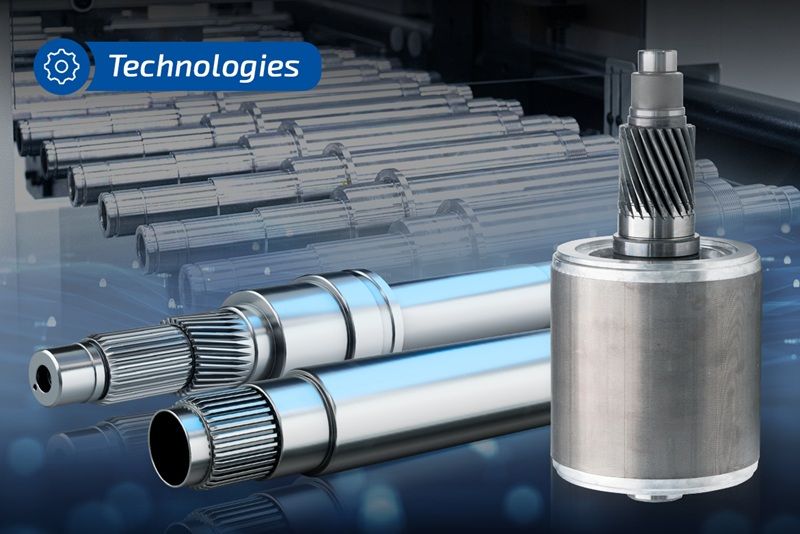
For the manufacturing of these components, this means: requirements for dimensional accuracy, concentricity, surface finish, and gear quality are increasing—not as an end in itself, but because they directly impact NVH behavior (Noise, Vibration, Harshness), efficiency, and service life. Even minor geometric errors can manifest as tonalities or vibration excitations at high motor speeds. Components such as the rotor shaft thus take center stage because they are subjected to high functional and dynamic loads and combine multiple interfaces of precision.
Continue to read this blog entry from EMAG here:
emag.com/blog/en/rotor-shafts-for-electric-drives