I’ve been reading T.S. Eliot’s Four Quartets for most of my adult life. My relationship to it has evolved the way great long friendships do. There are years I stay in touch and years I drift away. When I come back, the poem hasn’t changed, but I have. Different passages come in and out of focus depending on where I am in my life and the day I am reading. A line near the end of “Little Gidding,” the last of the quartets, summarizes this sustained experience of the poem itself: We shall not cease from exploration / And the end of all our exploring / Will be to arrive where we started / And know the place for the first time.

When I was first invited to join what would become the Strategic Networking Leadership Forum (SNL)—then in its earliest meetings as the Future Leaders Council—I wasn’t sure exactly what to expect. I was a relatively new face in the association, still finding my footing in a room full of other young owners and executives, eager to learn from each other. But I showed up, and that decision changed the trajectory of my involvement with this organization in ways I couldn’t have anticipated.

This paper presents a new analytical method using plate and disk mechanical models to calculate the gear body stiffness of face gear wheels, showing that stiffness decreases toward the outer radius—a behavior that conventional cylindrical gear approaches fail to capture.

Most gearbox repair follows a familiar sequence. A unit shows up damaged, the shop measures what’s worn, makes replacement parts, reassembles, and ships it back. Scott Franks, P.E., spent decades inside that world at Lufkin Industries and came to believe it wasn’t enough.

One of my favorite events each year is the Car Training Institute (CTI) Symposium USA in Novi, MI. The program brings together engineers to discuss and debate the current state of the North American automotive market from a powertrain, transmission, and electrification perspective.
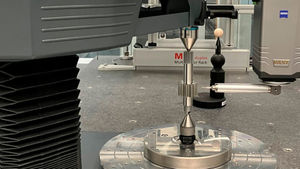
In this project, a practical measurement comparison of conventional tactile and optical systems was done. The goal was to investigate if and how good the measurement results of classic characteristics and waviness characteristics of the different physical measurement principles are comparable. In addition, it was determined whether the use of optical fringe projection measurement systems is suitable for gear metrology.

In heavy industry, gears rarely fail in the dramatic way people imagine. More often, there is no broken tooth, no immediate seizure, and no single event that clearly marks the beginning of the problem. What appears to be a healthy gear may already be operating with edge loading, unstable lubrication film, progressive surface fatigue, or overload at the tooth root. By the time visible damage becomes obvious, the failure mechanism has usually been active for some time.

The Motion + Power Manufacturers Alliance (MPMA) has released AGMA 948-A26, Electrified Vehicle Drivetrains, a comprehensive design guidance document for engineers developing geartrains and mechanical systems for hybrid, battery-electric, and plug-in hybrid electric vehicles. Approved by the MPMA Board of Directors on April 23, 2026, it marks a significant milestone as the industry navigates one of the most consequential transitions in vehicle engineering.

Humanoid robots, eVTOL aircraft, and additive manufacturing at production scale. Each of these technologies will create real demand for precision gears and bearings, and real disruption for the manufacturers who supply them. The question is whether our industry helps shape that transition or reacts to it afterward.

In the third century BCE, the Greek geometer Apollonius of Perga asked: How many circles can be drawn to touch three given circles, each at exactly one point? He answered it in his treatise Tangencies, concluding there are exactly eight distinct solutions to a single geometric constraint. The original text was lost, though a fourth-century report by Pappus of Alexandria preserved the result. When François Viète reconstructed the proof in the 1590s, the answer held. The problem endured not because it was abstract, but because it showed how much order hides inside a simple arrangement of curves.
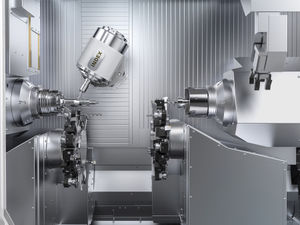
Index Corp. will present manufacturers with a variety of strategies to streamline production at IMTS 2026, taking place September 14-19 at McCormick Place in Chicago, Illinois. Visitors to the company’s Booth #339119 in the South Building will witness the North American debut of multiple new machines, including an entirely new design concept tailored to small part production. The company will also demonstrate its full portfolio of proven advanced machine technologies, as well as provide insight into how manufacturers can produce every job faster to maximize profitability.
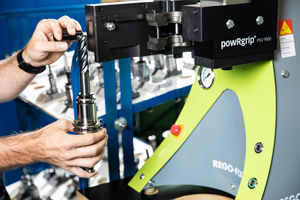
Rego-Fix USA will showcase its advanced toolholding solutions for manufacturers seeking enhanced precision, repeatability and reliability in their machining processes at IMTS 2026 from September 14-19 at McCormick Place, Chicago, Illinois, in Booth #431822. The company will feature the original ER collet and its patented powRgrip toolholding system. Also on display will be an Ed Carpenter Racing (ECR) racecar, symbolic of Rego-Fix’s ongoing sponsorship for the upcoming 2026 NTT IndyCar Series racing season.
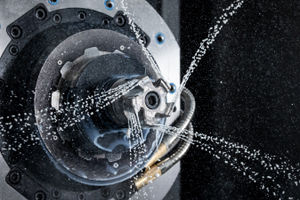
At IMTS 2026, Ceratizit will feature digital twin technology, a broad range of cutting tool innovations, and the company’s supply chain independence. Located in the West Building, Booth #431900, Ceratizit will highlight how the convergence of digital solutions, tooling innovation and supply chain control allows manufacturers to navigate increasingly complex production demands.
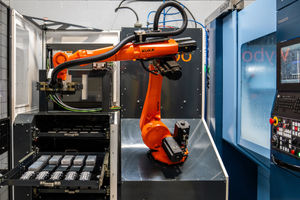
Kuka Robotics will showcase its advanced robotic automation solutions for machine tool tending, material handling and robotic milling with the company’s OEM and integration partners at IMTS 2026. Visitors to Booth #236807 in the North Building will experience live demonstrations that showcase how Kuka is making automation easier and how its industrial robots, autonomous mobile platforms and partner technologies work together in real-world production environments.
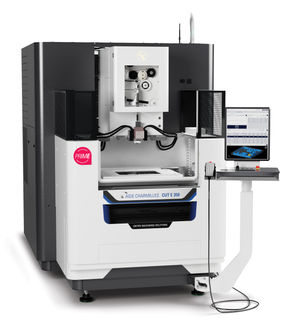
United Machining North America has launched limited-edition models of its wire EDM and milling machines. Agie Charmilles has launched the Cut E 350 Prime and the Cut E 600 Prime, limited-time offerings in its Cut E wire EDM series. It features Turbo Tech onboard cutting technology and the Uniqua HMI.
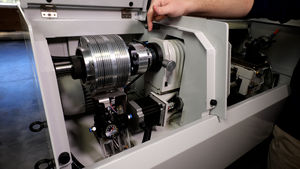
Tormach introduced a new Automatic Collet Closer for its 8L Lathe, delivering faster part changes, more consistent clamping and improved workflow efficiency for machinists producing small, precision components.

ABB Robotics launched its first fully automated sanding and polishing cell, the OmniVance Collaborative Surface Finishing Cell, empowering a new wave of manufacturers to automate key surface finishing tasks, such as sanding and polishing.

Vector Cos. welcomed Ryan Purcell as Midwest regional sales executive, bringing more than two decades of industry and sales experience to the team.

Southern Gear will install an advanced INDEX G320 Turn-Mill Center to produce medium-sized aerospace gears with high complexity and precision on a single machine.

Griffin Gear, a portfolio company of Mangrove Equity Partners, announced the acquisition of Birmingham Gear and Machine. This strategic partnership strengthens Griffin Gear's market position by integrating a business that has highly complementary service offerings, customer base, and geographical reach.

Under the umbrella of Aiktec – Digital Solutions, Klingelnberg brings together smart, industry-ready applications that bring the concepts of Industry 4.0 and the IoT directly to the shop floor. Smart Tracing is a web-based software solution for analyzing machine behavior. It is essentially the Klingelnberg DDQM (Data-Driven Quality Management) for any CNC machine, regardless of the manufacturer. Relevant process and performance information from the CNC machine is uploaded in the form of servo traces and managed and analyzed via a simple browser application.

ECM USA appointed Marco Möser to senior sales engineer for the western U.S. With more than 25 years of experience in the heat treatment industry, Möser brings extensive expertise in supporting OEMs on large-scale automotive programs.

Ceratizit USA announced the promotion of Steve Kuhnle to U.S. business development specialist for Defense. Kuhnle previously served as the cutting tool company’s sales director for the East Region.



Contact | Privacy Policy
©2026 Power Transmission Engineering