


The Doctor Is In
Inside Luftex’s five-pillar approach to gearbox repair
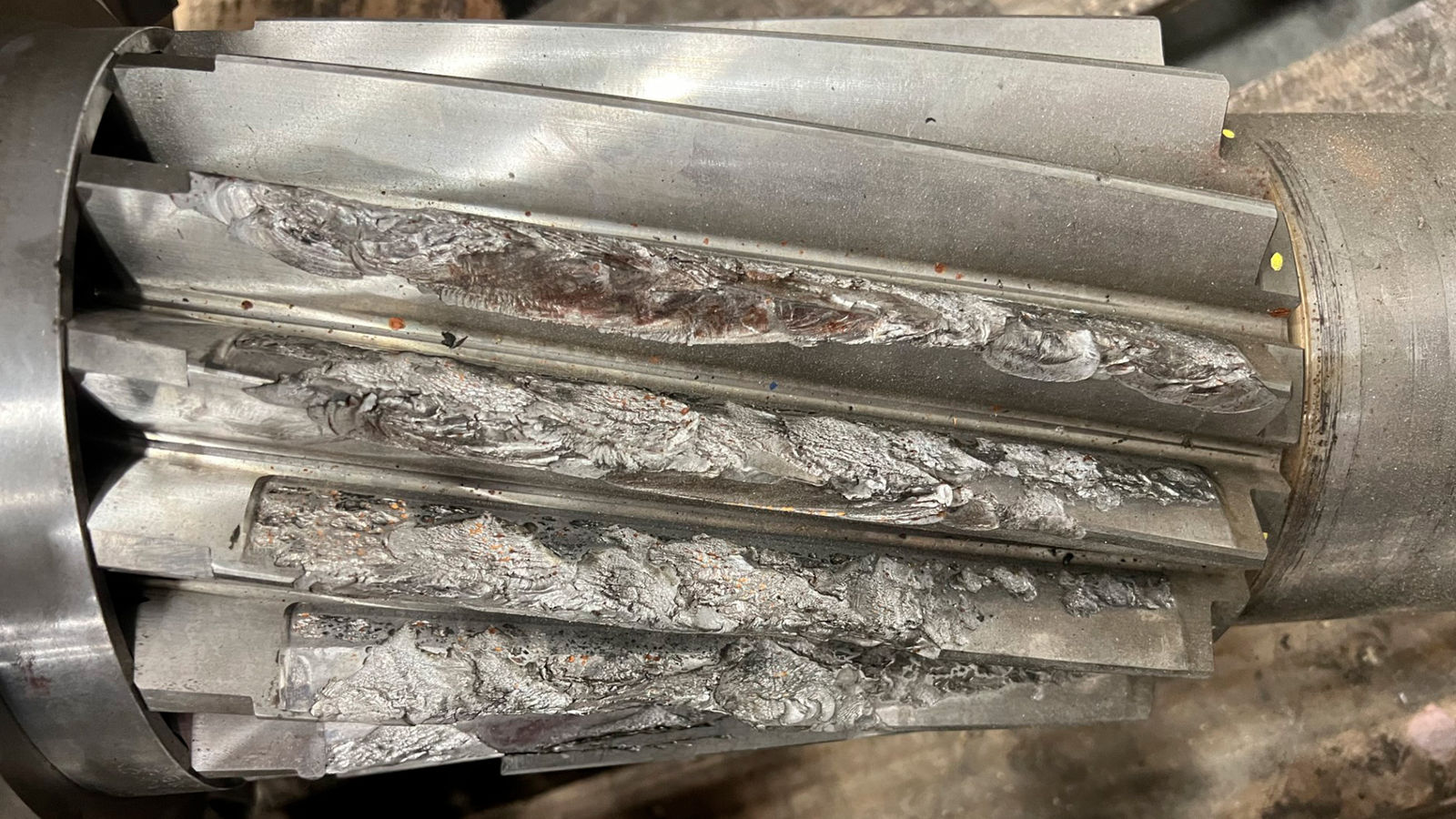
Case crush and tooth fracture on a helical pinion is the kind of damage that demands engineering analysis before anyone starts cutting replacement gears. (Image: Luftex)
Most gearbox repair follows a familiar sequence. A unit shows up damaged, the shop measures what’s worn, makes replacement parts, reassembles, and ships it back. Scott Franks, P.E., spent decades inside that world at Lufkin Industries and came to believe it wasn’t enough.
In 2015, Franks and his partner, Albert Stokley, opened Luftex Gears in Lufkin, TX. They built the company around a structured four-pillar service model—Inspect, Analyze, Advise, and Produce—that put engineering analysis ahead of production. A gearbox that arrived at Luftex didn’t go straight to the shop floor. It went through engineering first.
“Our time at Lufkin Industries is where we learned the value of customer relations through inspecting, analyzing, advising, and producing to ultimately complete the repair,” Franks says. What pushed them to go independent was the 2013 GE acquisition of Lufkin Industries. “The GE philosophy towards customer relations didn’t align with ours, so we decided to provide an alternative choice to customers who value involvement through Luftex.”
Luftex had no OEM product line and no installed base. Everything depended on the expertise of its people. During those startup years, Franks took seven days off in five years. Operators became CNC technicians. Managers and engineers doubled as ground crews and janitors. Everyone learned to drive a fork truck.
Inspection in Two Modes
Luftex’s inspection work splits into in-plant evaluation of running equipment and shop analysis of failed units. In-plant inspections look for signs of proper lubrication supply, acceptable contact across tooth flanks, and any evidence of metal distress. Scheduled periodic inspections add a trending layer: has the contact pattern shifted? Has noise increased? Have bearing clearances changed?