

Kuka Unveils Vision for Automation 2.0
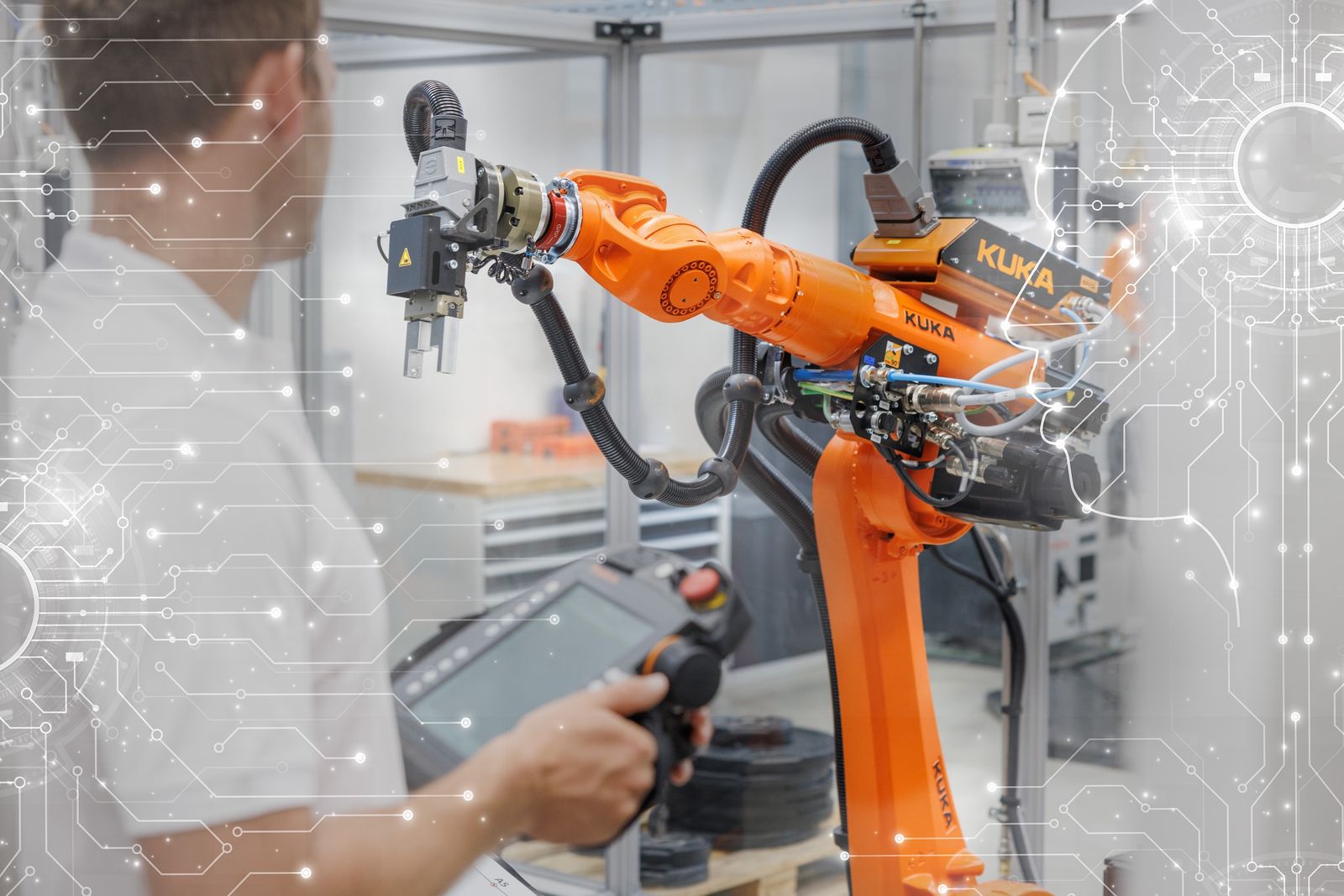
Kuka AMP, a new open automation platform designed to bridge traditional rule-based systems with AI-driven, intent-based automation, accelerating the shift to Physical AI in manufacturing, was introduced at NVIDIA GTC. Kuka AMP enables faster, more flexible deployment of intelligent automation by allowing systems to perceive, decide and act autonomously.
At NVIDIA’s recent GTC conference in San Jose, California, a Kuka robot appeared on stage underscoring a clear message: industrial automation is entering a new phase. AI is evolving beyond analysis to systems that can perceive, decide and act autonomously in the physical world.
“Robots and automation systems are evolving from programmable machines to intelligent collaborators, capable of learning, adapting and operating safely alongside humans,” Kuka Group CEO Christoph Schell said. “With new open software platforms like Kuka AMP bridging traditional deterministic automation, such as rule‑based, preprogrammed systems, with intent-based automation, the pathway from concept to deployment is becoming faster, more accurate, more cost-efficient and more autonomous.”
Kuka will be adding intent-based capabilities and physical AI across robotics, system integration, warehouse management, healthcare automation and simulation. It is repositioning itself to expand its global leadership role in the age of Physical AI, or what KUKA refers to as “Automation 2.0.”
“As we move toward Automation 2.0 and Physical AI, Automation 1.0 remains essential for Kuka and for the entire industry,” Schell said. “Proven, rule-based automation continues to deliver the stability and productivity our customers rely on, especially in high volume and safety-critical environments,” Schell explained.
Automation 1.0 remains the backbone, while Automation 2.0 adds new flexibility, Schell added.