


The Robotics Committee Update
Last year, the MPMA Robotics Committee debuted “The Near Future of Mechanical Drive for Humanoid Robots,” a white paper that cut through the 2024 headlines to ask a narrower, harder question: even if the investment and AI breakthroughs are real, can the mechanical drive side of humanoids (the motors, gearboxes, and actuators) actually get safe, reliable, and cheap enough to support commercial deployment at scale? The paper’s answer was candidly cautious. It walked through five rotary drive technologies (planetary, harmonic, belt and pulley, roller planetary traction, and cycloid) on a shared set of attributes and made the case that no single option wins across the board; the right choice depends on the application. It also named the three barriers that still stand between humanoids and the factory floor: mechanical safety, reliability, and cost, with return on investment difficult to justify until unit prices fall well below where they were, and still sit today.
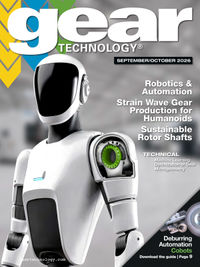
We have chosen to republish the paper in this issue (Page 24) because that framing hasn’t aged. If anything, the time since has sharpened it. Here’s what the committee has heard, seen, and debated since.
One of the more sobering conversations came from Ruben Scriven of Interact Analysis, who joined one of our webinars to temper some of the enthusiasm the white paper itself had to work around. Scriven pointed out that insurers remain reluctant to cover humanoid robots given the lack of technical standards and an immature regulatory environment, and that, at the time, only about 27 percent of manufacturing roles in the US were even technically feasible candidates for humanoid replacement. His firm’s own forecast (tens of thousands of humanoid units sold per year by 2032, generating more than $2 billion in revenue) is real, but it’s a multi-year curve, not an overnight one. That framing has stuck with the committee: the mechanical drive challenges laid out in the white paper aren’t urgent because humanoids are already here at scale. They’re urgent because the industry has a runway to get the engineering right before they are.
On the engineering side, there’s better news. The white paper closed by flagging five emerging technologies worth watching, from plastic gears to nanocomposite coatings, as the pathway to lighter, cheaper, more reliable actuation. Since then, the committee has hosted four separate presentations on new gearbox innovations aimed at robotics, and two of those concepts have already moved into production, a sign that at least some of what the paper described as promising is now leaving the lab. We also held a joint session with the MPMA Electric Vehicle Committee to look at the Hoop Drive, a new gearing concept with implications well beyond either sector.
The committee’s momentum carries into this fall as we celebrate the addition of a second track in the MPMA Fall Technical Meeting. This track was specifically created to showcase emerging technologies, innovative solutions, and real-world applications—several of which have been previously discussed in our emerging technology meetings. And we are already preparing for a strong 2027.
The webinar replay of “The Near Future of Mechanical Drive for Humanoid Robots” remains free on the MPMA website. A year on, the paper’s questions are sharper, not softer, and the committee would welcome your voice in answering them. Reach out any time, or better yet, join us for a meeting.