



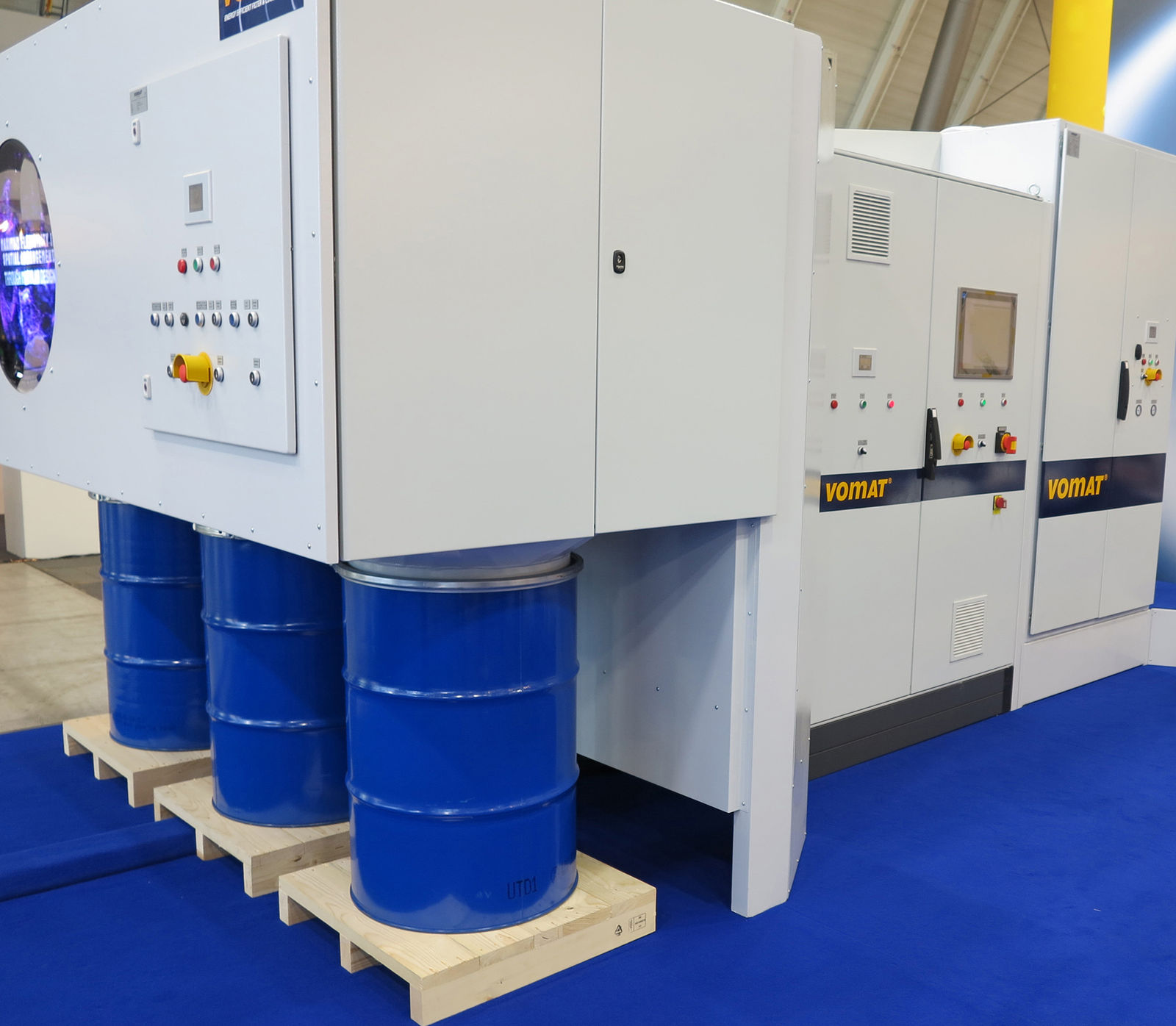
Vomat Coolant Ultra-Fine Filtration Turns Grinding Sludge Into Valuable Resource
Carbide is a valuable raw material – and currently more expensive than it has been for a long time. In the toolmaking and metalworking industries, this is putting resource efficiency and recycling increasingly in the spotlight alongside energy efficiency and process stability. The quality of cooling lubricants plays a key role in this context. Clean grinding oils are essential for stable and cost-effective processes. At the same time, the recovery of carbide from grinding sludge is becoming increasingly important. Vomat’s ultra-fine filtration technology demonstrates how both objectives can be efficiently combined.
The carbide market is currently under considerable pressure. Since the beginning of 2026, the price of ammonium paratungstate (APT), an important precursor for tungsten carbide, has more than doubled, rising from $920/MTU at the beginning of January to more than $2,090/MTU in early March. There is currently no indication this trend will come to an end in the near future.
At the same time, the structure of the market is changing. For 2026, global demand is expected to potentially exceed available supply.
Against this backdrop, a factor that has often been underestimated is becoming increasingly important: recovering carbide from the manufacturing process. What was once disposed of as grinding waste is developing into a strategic secondary raw material with a direct impact on both cost structures and security of supply.
Vomat, based in Treuen, Germany, has been one of the technological pioneers in coolant ultra-fine filtration for many years. Its systems, including both the FA series and central filtration systems, enable the complete separation of contaminated and clean oil using full-flow filtration. With filtration quality according to NAS 7, particles between 1 and 3 µm are removed.