
[advertisement]
Feature Articles

July 11, 2025


Matthew Jaster


Features

Industrial Flexibility

Drive System Design Examines Electrification and e-Mobility Markets

Hybrids, range extenders, electric vehicles, ICE vehicles and autonomous driving: There’s a little bit of everything in the automotive market today. Electrification and e-Mobility remain the end game, but politics, global policies, tariffs, and infrastructure challenges have put the “all-in on BEVs” on hold for the moment here in North America. The biggest question is how long will the electrification and e-Mobility markets fluctuate?

ICE-related technologies remain strong here in the United States while China remains steadfast on its mission to provide plug-in hybrid vehicles to its consumers. Tesla has its own unique set of challenges. So how does a company like Drive System Design respond during periods of market uncertainty? They adapt, evolve and diversify.

David Hind, principal engineer, Drive System Design (DSD), recently shared his insights on the state of electrification and e-Mobility today.

“I think the overriding feeling is that things will still go electric eventually, but maybe not when we first thought. There’s a resurgence of some things like range extenders, hybrids, etc., and DSD is well positioned to cater to all these technologies. We have an extensive background in hybrids and range extenders as well as internal combustion engines, so we’re in a great position to meet the evolving needs of the automotive market,” Hind said.

DSD is a leading engineering and mobility consultancy within the Hinduja Tech group specializing in the development of next-generation electric and hybrid powertrains, internal combustion engines, and associated technologies. The company offers test facilities in the UK, United States and India with a presence in Australia, Japan and South Korea.

Electrification Trends

Size, speed and efficiency continue to play an impactful role in components for electric vehicles and e-Mobility applications.

Share and save:


This article appeared in the July 2025 issue.


Read PDF

[advertisement]

“We’re seeing a number of trends in this space today,” Hind said. “Motors going to higher speeds, unlocking the benefits of size reduction and increased power density. On the inverter side, Silicon carbide is already a mainstay, but we’re seeing people moving toward GaN technologies and more complex architectures as well.” (GaN stands for gallium nitride, which is a crystal-like semiconductor material. GaN chargers can deliver power more quickly, charging up to three times faster than standard chargers).

“We’re also seeing a big uptick in multilevel inverters, not just for the inverter itself, but also for motor size reduction as the lower harmonic content from the inverter can allow a reduced thermal size of the motor. This translates into massive savings. In terms of electrified EDUs, we see this trend towards what we call “X-in-1” essentially taking more functions that would have previously been separate boxes all around the vehicle and then putting them into one box and trying to make the design as compact as possible. This is a great fit for DSD with our transmission and control expertise,” Hind said.

The transition from aerospace technologies being implemented into automotive applications has been noteworthy for many years, but Hind is seeing some of these developments go from automotive to aerospace—and branch off into several additional markets.

“We’re seeing big safety considerations taking place currently in aerospace as well as automotive. Sensor technology, for example, continues to offer accuracy, quick response times and invaluable data for monitoring and controlling performance. These aren’t new ideas but they’re being implemented in other areas such as oil and gas, off-highway, marine and defense applications. Now that electrification is happening across the board, there are huge growth opportunities in electric vehicles in these areas,” Hind added.

Drive System Design offers in-house design, development and testing for the rapid development of systems and components.

North American Outlook

A new technology for the next generation of high-speed, high power density traction and propulsion systems has been jointly developed by DSD and Transense Technologies. Hind recently presented this topic “Unlocking Powertrain Power Density with Innovative Motor Control,” during the CTI USA Symposium. The visit gave him a unique opportunity to look at some of the key electrification developments taking place currently in North America.

Editor’s Note: An article on this subject and some talking points from Hind will be included in the October issue of Power Transmission Engineering.

“There’s plenty of question marks in North America right now,” Hind said. “We mentioned earlier about the shift to multilevel inverters so we’re seeing more and more people working on those. Tier One manufacturers are developing devices specifically to support that. It’s not just about R&D anymore, you’re starting to see a shift in manufacturing. OEMs can’t go away and just do whatever they like. They need support there from the industry manufacturing parts underneath.”

Another obstacle continues to be infrastructure. The ability to put charging systems in place across the United States will determine how quickly the industry will evolve.

“Particularly regarding large commercial vehicles traveling across state lines. There’s talk of putting this megawatt charging capability in for those guys to be able to charge up. And, yeah, I think getting a system like this in place is going to be the key to unlocking electrification here down the road,” Hind said.

Preparing for the Future

How does one navigate the electrification and e-Mobility markets in 2025?

[advertisement]

Experience helps and according to Hind DSD attracts some of the best and brightest engineers in the industry. “I think that’s partly because of the varied and interesting engineering work we do here. When it comes to designing EDUs, we’ve got everything we need in terms of people and facilities to perform these tests in a controlled environment.”

DSD has been at the forefront of the electric vehicle sector since 2010. They offer increased capability in power conversion, including the development of DC-DC converters, onboard chargers and PDUs, as well as broadening their “X-in-1” design capabilities as full system developers.

OEMs and manufacturers in automotive, aerospace, defense, commercial vehicles, off-highway, and marine sectors will benefit from these advanced skills and integrated solutions. DSD consults on detail design and optimization of driveline systems including “X in 1” EDUs, transmissions, geartrains and ancillary systems.

“I was at the Farmington Hills, MI, test facility last year and the company has invested a lot of money to provide our North American customers with the same testing and development technologies we provide in the UK,” Hind said.

Drive System Design provides independent testing for powertrain systems including EV propulsion and transmissions, motors, electronics and more.

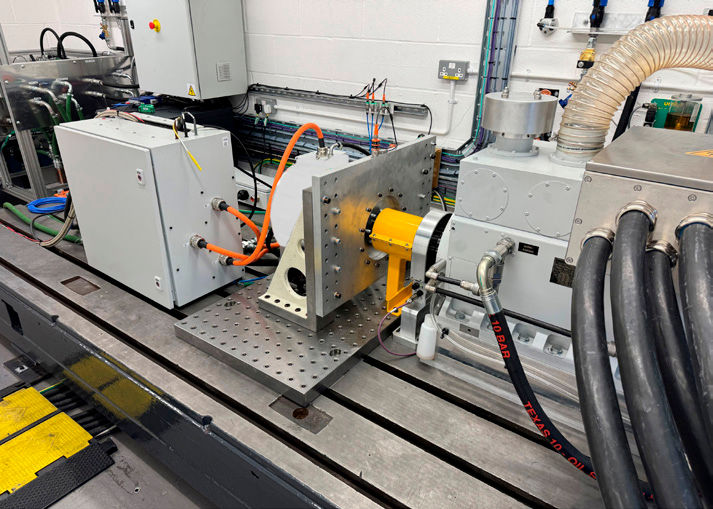
The Michigan facility features high-speed motor dynos and high-power drive unit test rigs—capabilities in high demand from customers in the region. With the fluctuations in automotive, DSD has transitioned and expanded its expertise in off-highway and defense propulsion systems.

Additional capability offered by the facility includes the support of hydraulic system development and loaded testing. The company has commissioned a 3E rig and has installed a battery emulator, for electric and hybrid vehicle development and hardware in the loop (HIL) testing. Existing driveline test equipment includes a transmission efficiency test rig that is suitable for all transmission types, including engine accessory drives, such as supercharger and CVT drives.

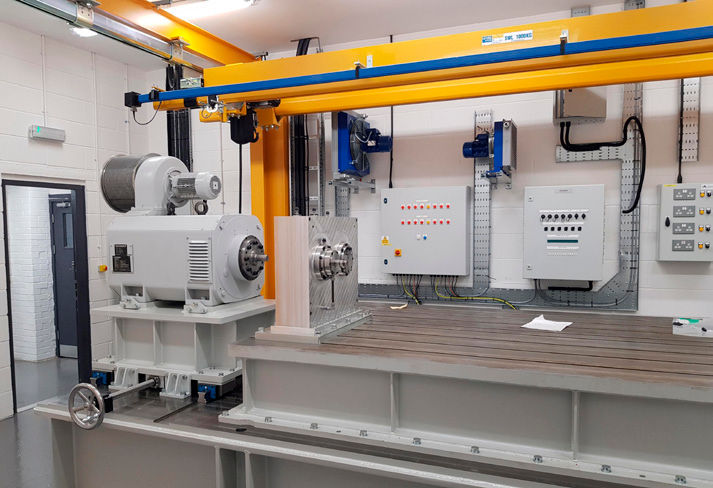
The latest UK facility—opened in May 2023—built on the success of DSD’s first high-speed eMachine test cell and supports a variety of development tests including calibration and control optimization projects and meets escalating customer demand for more powerful, efficient, and compact electric machines.

The facility is equipped with a 600 kW dyno, supporting eMachine and inverter development and validation. With up to 24,000-rpm, the rig offers a highly flexible, automated testing approach that shortens development cycles and accelerates time-to-market for DSD’s customers. Combined with the company’s proprietary motor testing power analysis routines and deep engineering expertise, DSD can deliver a comprehensive eMachine calibration loop, which gives customers rapid, actionable insights for advanced development.

And this flexibility is why DSD can provide consistent testing protocols and quality data for its global customer base—allowing DSD to efficiently balance workloads across regions, minimize bottlenecks and offer localized support.

With the volatile electrification outlook, especially in North America, Hind believes DSD is still prepared to keep up with trends and market demands in automotive applications.

“I think this comes back to providing a diversity of the solutions we see people developing right now,” Hind said. “I don’t think it’s probably a good idea to hedge all your bets on one thing. Certainly, in terms of electrification in converters and motors, there’s several competing technologies which are still good, strong candidates in the right application. Overall, automotive suppliers need to pay attention to the many competing technologies to understand which ones are going to be leading contenders down the road.”

drivesystemdesign.com

[advertisement]