As I write this, I am sipping hot coffee at Caffè Dante in an extremely cold New York City. I flew in from Tyler, TX—which got its own battering—and the severe cold lingering here is a remnant of Winter Storm Fern, the system that covered much of the country in snow and ice. The purpose of the trip is to give a poetry recital at the Amant Foundation in Brooklyn, of all things. Outside, people hurry past with their heads down, powering through what’s left of the storm. It’s a fitting image for the gear industry in 2026: heads down, pushing through conditions not of their own making, waiting for a break in the weather.

Motion + Power Manufacturers Alliance’s (MPMA) Gear Technology magazine publishes its State of the Gear Industry survey results annually in the January/February issue, and this year’s provides great insights into the current market and where industry leaders see 2026. Our Senior Editor, Aaron Fagan, does a great job outlining what the industry is saying, and it’s clear important market drivers are impacting the power transmission industry: Tariff uncertainty, moderate capital expenditures planned, suppliers needing to address both ICE and EV customers simultaneously, and continued industry consolidation.
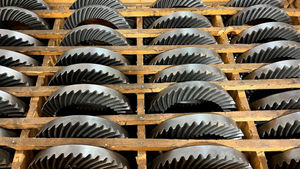
An excerpt from Gear Technology Solutions by Dr. Hermann J. Stadtfeld covering when and how individual bevel gear members can be replaced during gearbox service without changing the mating gear.
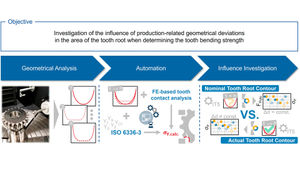
This study investigates how manufacturing-related geometry deviations in the tooth root area affect gear bending strength calculations, demonstrating that accounting for measured tooth contours rather than nominal geometries is essential for accurate material comparisons in fatigue testing.

Of the 137 respondents to our annual gear-industry survey, the message was clear: tariffs are the defining challenge of 2026. But the frustration runs deeper than the duties themselves. Manufacturers can absorb cost increases; they can’t absorb chaos. When rules shift weekly and exemptions evaporate overnight, planning becomes guesswork. One respondent captured the exhaustion: “In 2025, they were all over the place, without warning, up and down. Terribly disorganized.” Yet within this turbulence, distinct currents run strong. Defense and aerospace work has surged. Oil and gas, buoyed by loosened regulations, is “very active” according to multiple respondents, with mobile power units and gas compression driving demand. Overhaul and repair business is booming—when new equipment becomes expensive or hard to source, companies keep existing machines running longer, and that means gears.

Zarautz, Spain, might seem an unlikely place for a precision gear manufacturer. This beautiful coastal town in the heart of the Basque region is known for its beaches and considered among the top surfing destinations in the world. Surprisingly, the relaxed holiday atmosphere and laid-back surfer ‘vibe’ turn out to be highly conducive to the production of gears. It is here that you will find Engranajes Juaristi, a renowned gear producer, owned and operated for over 65 years by the Juaristi family.

Entry-level engineers are at a disadvantage when selecting power transmission components due to their lack of education and experience. While attending an ABET-accredited engineering school, most students are only exposed to gearing during a single lecture in a course titled Mechatronic Design, which is just one course over their entire educational journey. If they participate in a Senior Project in Mechanical Engineering, they might need to draw on the basics covered in that single lecture. Beyond these two opportunities, recent graduates have next to zero knowledge of gearing.

For over 40 years, MPMA (as AGMA) has hosted an annual technical conference, called the Fall Technical Meeting (FTM). It is the perfect forum in which to share new research and to disperse knowledge for the benefit of the gear and bearing manufacturing industries at a global level. These industries are faced with emerging trends and innovations that are challenging engineers to stay on course with cutting-edge technology to keep design, quality, materials, manufacturing, and analysis efficient. It is imperative that researchers and engineers communicate ideas with fellow experts in the field.
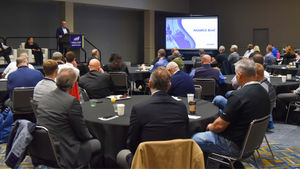
Electric Vertical Takeoff and Landing (eVTOL) aircraft are rapidly moving from concept studies to flight testing and early certification, driven by advances in electrification, autonomy, and lightweight materials. While often discussed in the context of urban air mobility (UAM), eVTOL development presents a wide range of engineering challenges that intersect aerospace, automotive, and industrial power transmission disciplines. MPMA is starting its fifth emerging technology committee to explore the driveline technology that propels the new class of air mobility. It will be called the Air Mobility Technology Committee, to keep the scope broad to new designs and new vehicles in this space.

I’ve been meaning to write about this for a while now, but like that one project that’s been sitting on your bench for months, sometimes things get away from you. I’ve always wondered about a scene in the original Star Wars that I’ve seen at least a hundred times, but have never been able to resolve, and perhaps there is no way to. I’m talking about the iconic trash compactor 3263827 scene—specifically, the terrifying moment when Princess Leia desperately shouts, “Don’t just stand there, try to brace it with something!” as the walls begin to close in.

With a new fully integrated gearbox-pinion-rack combination, Neugart expands its portfolio with a high-performance solution for maximum precision and efficiency in rack applications. The new concept combines optimally matched components that enable powerful, dynamic, and precise power transmission.
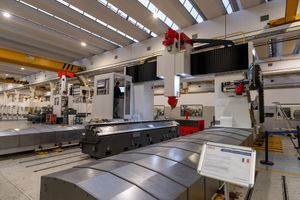
Although the Powermill G3 PC3 was designed by Mecof to meet the needs of customers with limited space but a strong focus on large-scale production, this machine leaves nothing to chance and is in no way inferior to its larger counterparts. Built for an Italian customer involved in general mechanics, this machine stands out for its ability to combine structural robustness and compactness while ensuring a large working area, high performance and Industry 4.0 digital solutions. Equipped with Heidenhain TNC 640 HSCI numerical control and Heidenhain's Industry 4.0 package, the Powermill G3 PC3 makes integration with the digital world one of its strengths.

Rego-Fix USA developed its powRgrip system for stable toolholding when machining parts made from all types of materials. Whether machining firearms or tactical gear, the powRgrip’s press-fit toolholding delivers higher precision, with greater vibration damping for longer tool life and superior surface part finishes.

Star Cutter Company introduces its new Double Pilot Reamer, a precision-engineered solution designed to deliver superior size control, exceptional surface finishes, and dramatically extended tool life in demanding barrel machining applications.
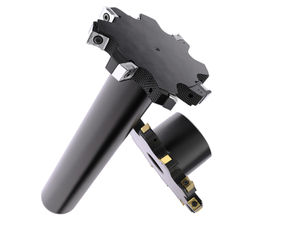
Seco releases the 335.18 disc milling cutter, a robust and customizable slotting solution engineered for real-world manufacturing. With over 70 standard variants and full customization via MyDesign, the 335.18 delivers stable, cost-efficient performance for any industry, machine, or material enabling manufacturers to achieve precision and reliability in every slotting operation.
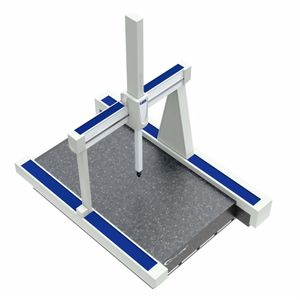
Two new ranges of bridge-type coordinate measuring machine (CMM), Maxima and Maxima R, have been launched by LK Metrology to meet a rapidly expanding demand for precise measurement of large, heavy components, often of significant complexity.

Platinum Tooling, the importer and master distributor of live tools, angle heads, speed increasers, Swiss machine products, knurling and marking tools and shrink fit tool holders manufactured by various international suppliers, will now carry REV broaching tools in North America.

Fuchs Lubricants Co. highlights Fuchs BluEV EDF 4101, a high-performance, sustainable wet EDF driveline lubricant specifically engineered for electric drive unit (EDU) and e-axle architectures with shared sump configurations between the gearbox and e-motor. Fuchs BluEV EDF 4101 delivers exceptional gear and bearing protection while simultaneously maximizing overall vehicle efficiency, combining state-of-the-art additive technology with premium, low-viscosity base oils.
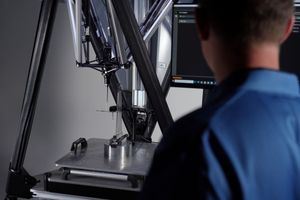
Renishaw’s MODUS IM Equator software is built on the MODUS IM platform, to maximize productivity for Equator and Equator-X gauging system users. MODUS IM Equator software is part of Renishaw's continuing investment in innovation with a drive to improve both the capability and customer experience of Renishaw metrology systems.

Teradyne Robotics will open a new U.S. Operations Hub in Wixom, MI, in 2026. This strategic expansion reflects Teradyne Robotics’ commitment to operating close to its customers and meeting the growing manufacturing demand in the U.S. and the Americas.

AILOS Robotics has raised €3.5 million to industrialize its patented R2poweR gearbox, targeting lighter, safer, and more energy-efficient actuation for humanoids, cobots, and wearable robotics. The VUB BruBotics spin-off is backed by a cross-border group of Belgian and German deep-tech investors and is moving into pilot projects for next-generation robotic systems.

Star SU, the marketing, sales and service affiliate of Star Cutter Company, announces the appointment of David Kruise as Marketing & Communications Manager. Kruise has nearly 30 years of experience in marketing and communications, with a strong background in technical documentation and sales support within the manufacturing sector. His early career as a machine repair technician gives him firsthand knowledge of tooling assembly and quality control, equipping him with a unique perspective that connects technical expertise with strategic marketing.

Blaser Swisslube, Inc. and Nidec Machine Tool America recently announced a strategic partnership designed to help manufacturers achieve higher productivity, precision, and process reliability.



Contact | Privacy Policy
©2026 Power Transmission Engineering