


Still Turning
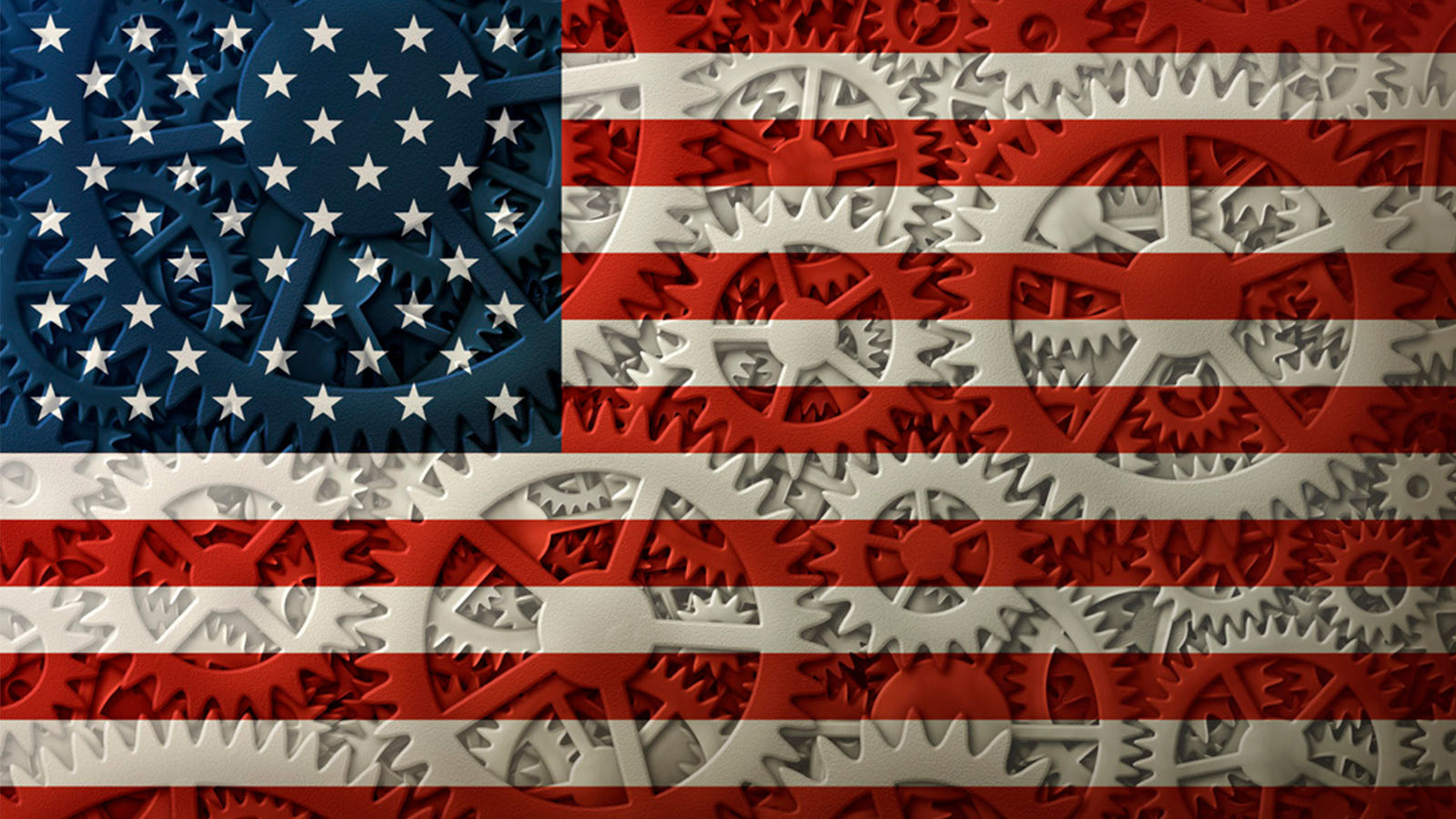
This month, the United States turns 250. The republic that followed the adoption of the Declaration of Independence became, among many other things, a movement. We tend to tell the national story in documents and battles, but it can just as fairly be told in the things that turn.
Gears are older than the nation that came to depend on, and thrive because of, them. In this issue, Hanspeter Dinner traces noncircular gears back to the notebooks of Leonardo da Vinci, sketched between 1478 and 1519, well before there was a United States to put them to work. But it was here, across the long American century that followed independence, that geared motion was set loose at scale: in the line shafts of the early mills, the machine tools that made other machine tools, the automobile, the aircraft, and eventually the spacecraft. None of it ran without teeth meshing somewhere, reliably, out of sight.
Our own part in that story is younger and a good deal more modest. Gear Technology was founded in 1984 by Michael Goldstein, who recognized that a field this specialized—and, in his own words, this insular—needed a publication devoted entirely to it. For more than four decades, the assignment has not really changed: to gather what the industry knows and put it where the industry can find it. The Michael Goldstein Gear Technology Library, now freely available to anyone with a connection, remains the largest open record of that knowledge anywhere. It is, in a real sense, the field’s memory.
This issue is a fair cross-section of the work as it stands in 2026. There is deep theory: Dr. Hermann J. Stadtfeld’s third excerpt from Gear Technology Solutions takes apart the geometry of root interference, the kind of fault that hides from a roll tester and surfaces, years later, as a fractured tooth. There is research crossing into practice: Dr. Joachim Thomas and Jürg Fürst, in a paper first delivered at last year’s FTM, weigh crown gears against bevels and find real weight savings hiding in a less familiar geometry. There is measurement: Gleason’s Mark Cowan describes pulling waviness data from a standard probe in a single inspection cycle. And there is the frontier: Mike Fish of Dontyne reports double-digit power-density gains from gears that abandon the involute altogether, tuned for the demands of electric drive.
Set alongside these are the surveys and dispatches that keep the rest of us oriented—Matthew Jaster’s look at the 5-axis machines now defining what a complex part can be, and Mary Ellen Doran’s notes from the additive, drone, and robotics show floors, where our MPMA members, she is glad to report, were already standing.
The institution doing the recording is changing, too. In 2025, AGMA and ABMA joined to form the MPMA, and this October, STLE joins the FTM as a co-host. As Todd Praneis explains in this issue, the FTM is pitching a bigger tent—making room beside the peer-reviewed papers for the practitioners whose hard-won, undocumented experience has always shaped what actually happens on the floor. Continuity, it turns out, is not the same as standing still.
That is the through-line worth marking at the United States semiquincentennial. A country runs on the things that keep turning, and the things that keep turning run on people who understand them well enough to make them better. Our share of that is small—four decades against two and a half centuries—but the charge has been steady, and it is the one we take up again here.