This month, the United States turns 250. The republic that followed the adoption of the Declaration of Independence became, among many other things, a movement. We tend to tell the national story in documents and battles, but it can just as fairly be told in the things that turn.

Through loaded tooth contact analysis of two applications, this paper demonstrates that crown gears can match bevel gear load capacity while offering meaningful advantages in weight reduction, axial-force-free pinion mounting, and assembly simplicity.

This excerpt from Gear Technology Solutions explains how oversized cutter blade edge radii cause root interference in bevel gears, and how to select correct radii to avoid noise, flank damage, and tooth fracture.

Modern bevel gear manufacturing increasingly requires inspection systems that go beyond traditional flank form evaluation. Surface-related characteristics—particularly waviness and roughness—play a critical role in defining gear performance under load, directly influencing noise behavior, efficiency, and fatigue life.

There’s a growing list of challenges facing manufacturers today that goes beyond supply chain, energy and workforce obstacles. Many machinists and engineers cite customer requests for shorter lead times, tighter tolerances and improved part quality as imperative to future success. Unfortunately, many standard machine tools lack the necessary functions and capabilities to overcome uneven tool paths, complex surface geometries and long machining times.

Hard finishing, the accuracy-restoring operation that follows heat treatment, is for external gears a crowded field: generating grinding, profile grinding, and gear honing all compete, and the engineer mostly selects among mature options on cost and quality. For internal gears, the choices are far fewer, and they pull in opposite directions. SkiveFinishing, which Liebherr-Verzahntechnik introduced publicly at EMO Hannover in September 2025, is aimed at that shortfall. To understand why it matters, look first at what makes the internal gear the awkward case.

Dontyne has invited several automotive companies to present applications to assess the suitability of non-involute technology. There are not always advantages over involute designs, but EV applications seem especially suited, and 15–25 percent power-density gains are typical. There are also consequential benefits, such as reduced gearbox housing and transport costs.
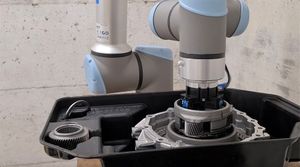
AICA's software helped Schaeffler to make their robotics more flexible by developing the Smart Assembly Module. Since this collaboration, AICA Smart Assembly was implemented on both collaborative and industrial robots and scaled to production in Schaeffler’s facilities in China. Read more about the case study in the August 2026 issue of Gear Technology.
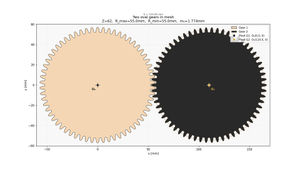
Unlike linkage mechanisms but similar to cam-follower mechanisms, elliptical and oval gears provide a compact arrangement for delivering periodic speed variations, making them suitable in e.g., packaging systems, textile machines, flow meters, or heavy press machines, with a slow working stroke and a fast return stroke. This document focuses on the differences between elliptical gears and their oval cousins. In extremis, both are transformed into circular gears

The Fall Technical Meeting (FTM) is expanding its format—and its audience. Here’s why researchers and practitioners alike should be paying attention.

Part of my job is getting into rooms that our members may not have time to visit themselves. Over the past two months, I attended three events covering the emerging technology spaces most relevant to the gear and bearing industry: RAPID in Boston, April 13–16; Xponential, the premier drone and unmanned systems show, May 11–14; and the Boston Robotics Summit, May 27–28. Here is what I took away from each one.

In light of the United States’ semiquincentennial, few images are more quintessentially American than a Fourth of July parade with bright red fire engines. There’s a Charles Ray sculpture that caught my attention—owned by The Broad and rarely on view, but recently shown indoors, of all things, at Jeffrey Deitch Gallery in Los Angeles—titled Firetruck (1993). It’s a child’s toy fire engine built at the scale of a real one. Is this a real fire engine that has become a toy, or is it the other way around?
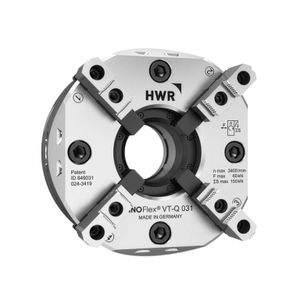
HWR Workholding USA has announced that IMTS 2026 will feature the North American debut of two new products within its INOFlex family of flexible, high-performance 4-jaw chucks. The company will also be showcasing a comprehensive sampling of its full range of workholding solutions for turning and milling applications. Additionally, attendees who visit the company’s Booth #431579 in the West Building will receive a commemorative German-style beer boot pint glass.

At IMTS 2026, Mitsubishi Electric Automation will feature live demonstrations of LoadMate Plus and ARIA, two pre-engineered robotic machine tending solutions designed to help manufacturers automate CNC mills and lathes with confidence, flexibility, and scalability. Automated machine tending enables longer spindle uptime, improved process consistency, and redeployment of skilled workers to higher-value tasks. Robotic tending also reduces unplanned downtime and supports lights-out or extended hours.
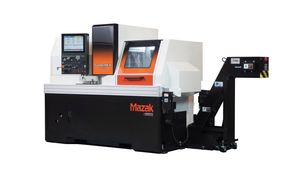
Mazak will showcase advanced machine tool, automation and digital solutions designed to help manufacturers increase throughput and do more with fewer resources at IMTS 2026, in Booth #338300. As production demands accelerate across key industries, manufacturers are under increasing pressure to boost output while managing labor and cost constraints. Mazak’s technologies address these challenges through integrated machining, automation and digital connectivity.

Zimmermann will feature a 5-axis portal milling machine for lighter-weight machining applications aimed at large structures at Booth #339336.

At IMTS 2026, Booth #432201, Platinum Tooling Technologies, Inc., the exclusive importer of Heimatec live tools and angle heads, will display a variety of complementary products designed to enhance the capabilities of Swiss CNC lathes, including such popular brands as Citizen, Star and Tsugami. In addition to the live tooling and angle heads, Platinum will display speed multipliers in gear ratios of 1:2, 1:3 and 1:4 with max speeds to 48,000 rpm to significantly boost production in the busy shop. Live and static tools and speeders for Swiss machines are in stock at Platinum Tooling in Chicago and many supply chain outlets to serve the North American machine tool market.

Sandvik Coromant will highlight its comprehensive approach to solving real-world challenges in machining, metalworking and production at IMTS 2026.

The Klingelnberg Group has commissioned its own podcast studio at its Hückeswagen site and is launching a new podcast series “Gears for Ears.”
The Motion + Power Manufacturers Alliance (MPMA) announces the release of a new industry guideline addressing the rapidly evolving EV landscape: AGMA 948-A26, Electrified Vehicle Drivetrains. This provides industry guidance on electrified drivetrains for vehicles, including hybrid electric (HEV), battery electric (BEV or EV), or plug-in hybrid electric (PHEV) vehicles, with the prime mover power source or sources as any combination of battery, fueled ignition engine, and/or fuel cell. These can generally be referred to as xEVs.

Forest City Gear announced the retirement of Jeff Mains, Director of Technical Operations, following many years of dedicated service and leadership within the company. Mains’s transition from his full-time role went into effect on Friday, May 29.

The Society of Tribologists and Lubrication Engineers (STLE) — the technical society serving individuals, companies and organizations that comprise the tribology and lubrication engineering business sector — today announced that Steffen Bots, vice president of global sales & R&D at ADDINOL Lube Oil GmbH, in Leuna, Germany, assumes the role of 2026-2027 president for a one-year term beginning May 19.



Contact | Privacy Policy
©2026 Power Transmission Engineering