Flender unveils the next generation of wind gearboxes
The reduction of transportation costs using smaller components can accelerate wind energy development. (All images: Flender)
Logistics, transportation and maintenance have always been critical challenges in wind turbines. There’s truth to the notion that large components can cause bigger headaches on their massive size and scope alone. A smaller, compact drive solution can help eliminate today’s renewable energy challenges while reducing costs.
Flender, under its wind energy brand, Winergy, for example, realizes wind turbines need higher power ratings without growing larger. Wind turbine components must be accessible and able to be shipped to installation areas quickly and efficiently. The nacelle’s weight needs to be low to avoid massive foundations.
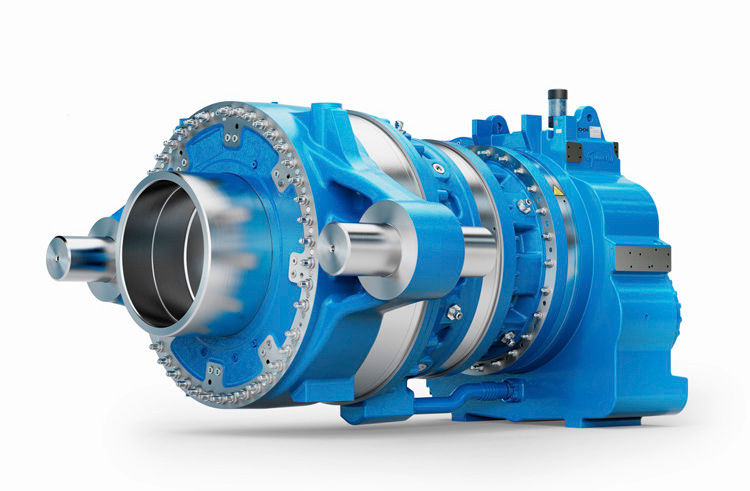
A milestone in this effort is the introduction of REVO, a new drive concept that has achieved the coveted threshold of 300 Newton meters per kilogram (Nm/kg) in torque density. REVO is a design concept offering 300 Nm/kg for new turbine developments. The result is a significantly more compact drive system. For the same power output, the required outer diameter can be reduced by up to 25 percent.
“Torque density—sometimes also named power density—refers to how much torque a drive can transmit per kilogram of material. It’s a key metric for the overall CAPEX (capital expenditure) of a wind farm,” said Andreas Klein, vice president of drive systems and gear engineering at Flender’s wind segment.
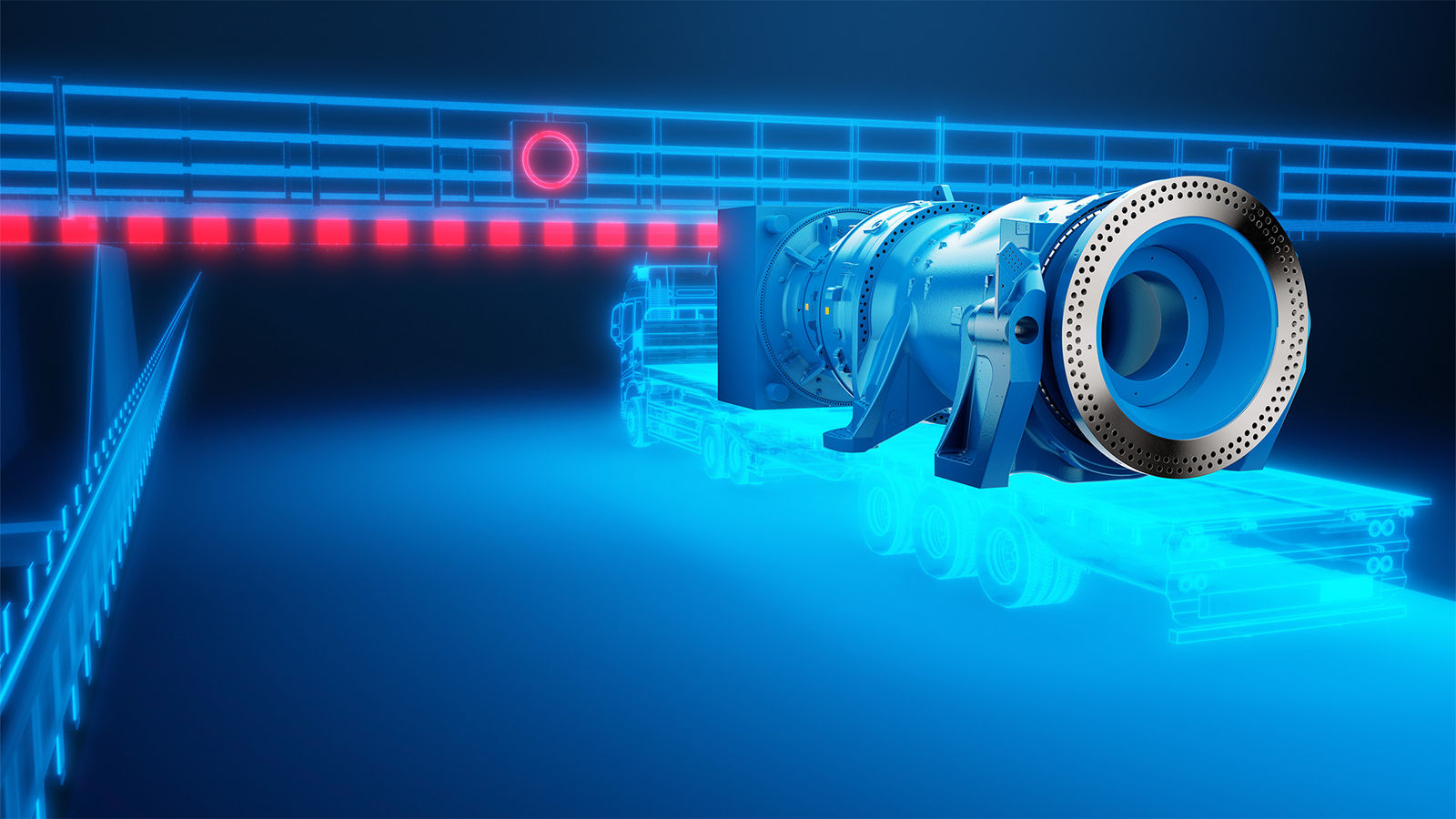
The compact gearbox design addresses several critical challenges in developing next-generation turbines. Transportation costs are reduced and drive systems remain road-transportable—even for current and future turbine classes exceeding eight megawatts. REVO’s compactness opens previously inaccessible installation sites, accelerating wind energy deployment. Reduced material usage also enables smaller, lighter nacelles and lowers the mass at the top of the tower.
This, in turn, allows for cost savings in tower and foundation construction. Compared to gearboxes of the same power class in 2010, REVO enables a 70 percent reduction in CO₂ emissions thanks to its efficient use of materials. Additionally, the use of low noise journal bearings ensures compliance with European noise emission regulations and increases reliability.
One key design element is the unique combination of new technologies resulting in better torque density. These include an optimized combination of planetary stages and gears per stage, as well as space-saving, noise-reducing second generation journal bearings. Enhanced gear materials and induction hardening further improve drive reliability.
The goal is to achieve higher power classes within the same design space. To this end, Winergy optimizes all gearbox components and uses new technologies to achieve a space-optimized design. Today, a design space that could accommodate a 4.5 MW power class in 2017 can already handle twice as much in 2024: a 9 MW gearbox in the same size. Gearboxes with the same power class today are significantly smaller than previous models.
The Development Process
For R&D efforts, Winergy has spent a great deal of time identifying future bottlenecks in wind applications. By optimizing the planetary stage layout, enhancing bearings and gears, and utilizing advanced materials with induction hardening all these technologies have been integrated into a single prototype to demonstrate system functionality and reliability. REVO can be integrated into a customer’s individual drivetrain and tailored to meet their specific needs.
This development began by adding a third planetary stage to the process. By adding a third planetary stage, a significantly higher overall gear ratio can be achieved. In addition, the number of planets per stage is higher: In the first planetary stage, Winergy increases the number of gears from the original four to eight or nine. In a multi-stage planetary gearbox, the load to be transmitted is thus distributed over several gears and stages, reducing the load on individual components. Smaller gear sizes can now be used, which enables a higher power class without increasing the design space.
The forces are distributed more effectively through several stages, reducing the load on the bearings and housings. This allows the design to be further optimized. With three stages, planetary gearboxes can often be better modularized and adapted to various design requirements, which optimizes the use of space and thus increases torque density.
Another key aspect of the design process was the introduction of journal bearing technology for the gearboxes. Bearings have a crucial impact on the reliability of the entire gearbox and its operating costs: With the right installation, journal bearings are more reliable and cause less downtime compared to planet roller bearings. Journal bearings enable increased torque density, which leads to more power in the same design space. Compared to planet roller bearings, journal bearings are significantly cheaper—and shorter lead times are possible.
Wind turbines can be built today more compactly and efficiently to deliver greater output without increasing size. This significantly lowers energy production costs.
The first ideas for the use of journal bearings came up back in 2009 and the first prototype was tested in the field four years later. Today, Winergy has a track record of more than 50,000 journal bearings in serial gearboxes worldwide since the first small series production in 2017. This is around 23 GW of installed base with lower failure rates compared to planet roller bearings. For perspective, this amount of energy could power around eight million electric vehicles for a year.
The conversion of speed and torque takes place in the geared components. In the further development of these components, Winergy has continuously improved materials, processes, and methods in recent years.
One example is the introduction of inductively hardened internal gears representing an optimal solution in terms of cost and power density. In line with the V-model, Winergy, together with its development partners, has examined this process at the metallurgical level. Furthermore, the gearings were validated on component test benches, and subsequently, the components were thoroughly tested in extensive gearbox tests. Field experience from several small series confirmed the robustness of the gears.
[advertisement]
Winergy found a way to design gears more compactly while maintaining the same robustness against tooth root breakage. This was made possible by combining modern simulation methods with customized manufacturing tools. This step was validated by intensive gear testing and by analyzing field data from more than 400 GW of installed wind gearbox capacity. Understanding the natural variation in material quality and the loads was a key factor in achieving higher power densities. Here, Winergy developed the latest methods along the entire value chain to offer an optimal product in terms of reliability and cost.
A Shifting Global Outlook
A joint report between the World Meteorological Organization (WMO) and the International Renewable Energy Agency (IRENA) concluded that 2024 was the warmest year on record, with global temperatures reaching around 1.55°C above pre-industrial levels. This brought pronounced regional shifts in solar, wind and hydropower potential, alongside a four percent increase in climate-driven global energy demand compared with the 1991–2020 average. These climate-driven changes are occurring as global renewable energy capacity surpassed 4,400 GW, amplifying the interaction between climate conditions and energy systems at an unprecedented scale.
Closer to home, America’s demand for electricity continues to grow, according to cleanpower.org. Clean energy projects in rural areas represent a unique opportunity to meet our power needs while delivering tangible local benefits. Offshore wind power offers a vital solution for the U.S. electric grid by delivering clean, reliable energy to densely populated coastal regions, while also bolstering the economy and protecting our air and water from harmful pollution and emissions.
With nearly 80 percent of Americans living within 200 miles of the coast, offshore wind is uniquely positioned to meet the rising demand for electricity in these high-consumption areas. The consistent winds offshore ensure a stable and sustainable power source, making it America’s next great energy opportunity. Both onshore and offshore wind production will benefit greatly from enhancements to the drivetrains powering these systems.
“In recent years, we’ve already managed to double the torque density of our drives,” said Tommy Rahbek Nielsen, president of Winergy. “With REVO and the achievement of the 300 Nm/kg mark, we’re unlocking even more possibilities for our customers—greater output in the same footprint, or more compact components without sacrificing performance and reliability. Together, we select the optimal technology package for each project.”