High-Volume Holemaking for Gear Production Success
Consider exchangeable-tip solid round cutting tools for durability, precision, and performance
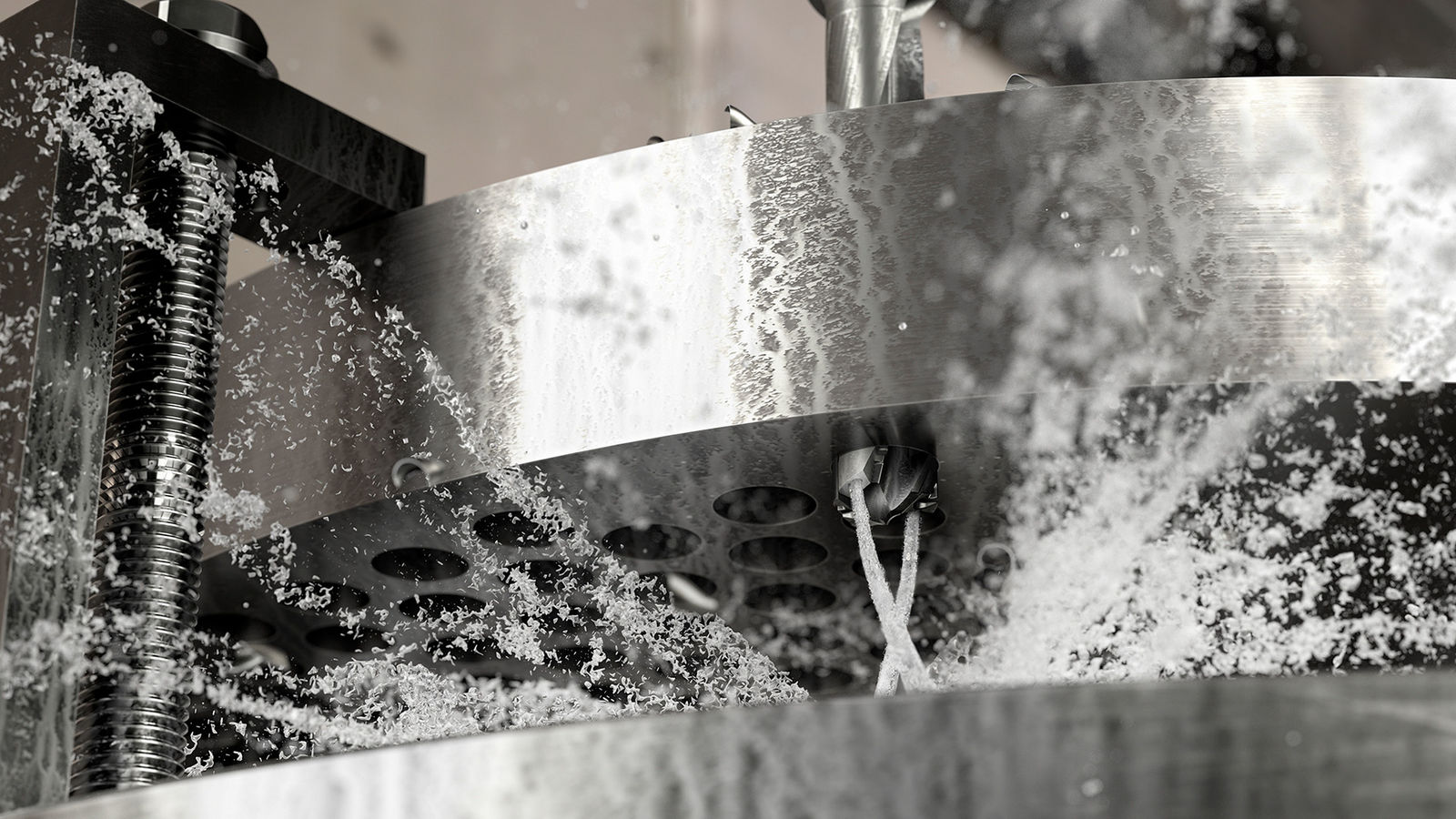
When drilling in high volumes, exchangeable-tip drills can offer a highly efficient solution. (All images: Sandvik Coromant)
High-volume holemaking in gear production demands not only speed and efficiency but also precision and reliability, particularly when working with critical components such as gearbox housings and gear blanks. These parts often require tightly toleranced holes that must be perfectly aligned to ensure proper assembly, load transfer, and long-term durability. For manufacturers, achieving these standards while maintaining cost-effectiveness is an ongoing challenge.
Gearbox housings are complex, high-precision components that typically require multiple critical holes, all of which must meet tight tolerances to ensure proper alignment, sealing, and load distribution.
Drilling operations may be complicated by the materials involved, such as hardened or alloyed steels, and by the geometric demands of the parts themselves, which can introduce access limitations or require long-reach tools. Maintaining consistent hole quality across high production volumes—all while managing heat buildup, chip evacuation, and tool stability—makes gearbox drilling a particularly demanding area of metal cutting.
Common Gearbox Challenges
So, what must manufacturers consider when drilling holes for gearboxes? Challenges for this application go beyond basic holemaking, and accuracy is everything.
Gearbox housings, for instance, typically involve several types of precisely located holes, including bolt-circle patterns for cover and case fastening, dowel-pin bores for alignment, and through-holes for mounting the housing to the vehicle chassis or transmission subassemblies. These holes often vary in diameter and depth but share a common requirement: strict positional tolerances and consistent surface finish to ensure proper mating with gears, bearings, and shafts.
Because housings are usually forged from materials such as cast iron and then semi-finished to tight specifications, the drilling process must contend with scale, hard inclusions, and interrupted surfaces—all of which can increase tool wear and risk of vibration or deflection. Additionally, holes are often located near thin sections, where stability can be compromised, and chip evacuation becomes difficult.
Even though these hole depths are typically short or moderate, it’s essential to ensure the drilling occurs without excess vibration or misalignment so the gearbox can function as intended. In high-volume production, these challenges are further amplified by the need for long tool life, minimal setup time, and consistent hole quality across a large run of parts. Addressing them requires a drill that combines strong centering capability, predictable wear behavior, and robust design.
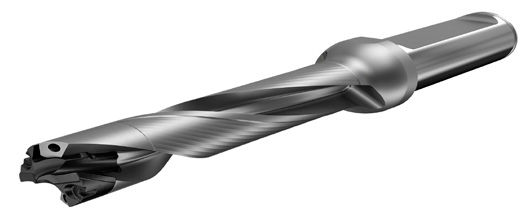
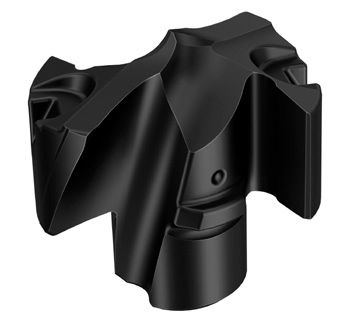
Featuring a replaceable carbide tip, tool changes can take place faster without needing to remove the drill body from the holder.
Gear Blank Challenges
It’s also important to consider components that will interact with these housings, such as gear blanks. As the pre-machined forms that will eventually become finished gears, these components must align seamlessly with bearings, shafts, and the gearbox housing itself. Gear blanks are often made from hardened or alloyed steels, which require precise machining tolerances. Ensuring that gearbox housing holes are produced to exact measurements will help maintain the overall dimensional stack-up that’s required for these hard components to fit and function properly.
Since gear blanks are subject to extremely high forces during machining, especially during tooth cutting, any flaws in alignment can be magnified downstream in the drivetrain. Precision in holemaking is therefore not only critical for assembly, but also for ensuring the long-term performance of the gearbox.
Machining Tips
The overall machining setup plays a critical role in ensuring process stability, tool life, and part quality in gearbox and blank machining and directly impacts the overall machining result. For short- to medium-depth drilling, especially in alloyed or cast materials common to gearbox housings, moderate to high feed rates and cutting speeds are typically used to maintain productivity. However, stability and chip evacuation must be carefully balanced.
Excessive speed can lead to heat buildup and premature tool wear, while an insufficient amount of speed can result in poor chip formation, something that can lead to serious consequences such as increased tool wear, poor hole quality, and possible chip jamming. Coolant plays an integral role in alleviating issues with chip jamming, and an optimized chip flute geometry with twisted coolant holes encourages good chip evacuation.
Using internal coolant supply at pressures between 145–436 psi (10–30 bar) is generally recommended, particularly in blind or interrupted holes, to promote reliable chip evacuation and minimize heat transfer to the workpiece. Emulsion-based coolants are most common for steel and cast iron, though some shops may use straight oils for improved surface finish in critical sealing surfaces or alignment bores.
When drilling components such as gear housings and gear blanks requiring tight positional tolerances, exchangeable drill tips can give manufacturers better process stability while lowering overall tooling costs.
Consider Exchangeable-Tip Drilling Tools
Selecting the right drilling tool is pivotal to overcoming the challenges of high-volume holemaking in gear production and to achieving consistent, high-quality results. The ideal drill must balance accuracy, durability, and productivity, especially in high-output environments where even small improvements can yield significant cost and time savings.
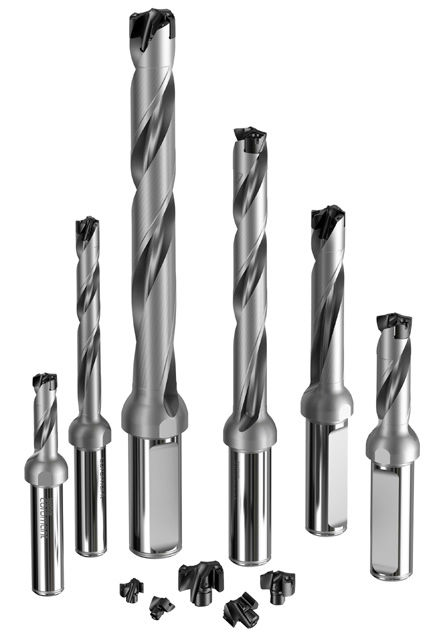
When drilling in high volumes, exchangeable-tip drills can offer a highly efficient solution. Featuring a replaceable carbide tip, tool changes can take place faster without needing to remove the drill body from the holder. In addition, some exchangeable-tip drills are designed to alleviate the need for pilot holes or pre-setting equipment, thereby drastically reducing cycle times and minimizing the reliance on operator intervention.
An exchangeable-tip drilling strategy can reduce downtime, simplify inventory in busy machine shops and ensure more consistent hole quality. When drilling components such as gear housings and gear blanks that demand tight positional tolerances, using exchangeable drill tips gives manufacturers better process stability while lowering overall tooling costs.
[advertisement]
When considering exchangeable-tip drills, it’s important to evaluate the clamping interface. Choose one that enables fast and easy tip changes without spare parts, ensures reliable drilling at high feeds and speeds, and delivers superior clamping strength. This will help you achieve straighter holes with tighter tolerances. It also extends drill body life for a more robust exchangeable-tip drill.
Some exchangeable-tip drills, like Sandvik Coromant’s CoroDrill DE10, are designed to eliminate the need for a pilot hole, thereby drastically reducing cycle times.
Improving Productivity in Gearbox Drilling
Recently, an automotive manufacturer faced issues with high cutting forces deforming its drill bodies, specifically while machining gearbox housing components from 47CrMo4 alloyed steel. This issue led to tool failures and increased costs.
Switching to Sandvik Coromant’s CoroDrill DE10 resolved these challenges. DE10 is an advanced exchangeable-tip drill that’s engineered specifically for high-volume holemaking and is shown to boost productivity while streamlining operations, thanks to its advanced M5 tip geometry. This innovative design achieves an ideal balance between high feed rates and precise penetration, enabling the tool to deliver exceptional performance across diverse materials from steel alloys to stainless. And, as a plug-and-play solution, CoroDrill DE10 integrates easily into existing setups, making it a practical upgrade for manufacturers without having to overhaul their systems.
Using a feed rate of 0.0138 in./rev (0.35 mm/rev) at a depth of cut of 2.5 times the drill diameter, the tool delivered a 17 percent productivity boost. CoroDrill DE10’s robust design and patented pre-tension clamping interface ensured exceptional accuracy, extended tool life, and minimized downtime.
As gearbox designs grow more complex and production volumes continue to rise, manufacturers face mounting pressure to improve accuracy, consistency, and cost-efficiency in holemaking. Success in this area depends not only on smart machining strategies and optimal cutting parameters but also—and perhaps most critically—on selecting the right tool for the job.