268 results for "my story" ( Sorted by relevance. Sort by date )

The 2026 edition of IMTS – The International Manufacturing Technology Show, which ran Sept. 14-19, reflected dynamic changes in manufacturing investment and how people view the industry, as well as an expanding ecosystem of technologies emphasizing AI and automation. IMTS 2026 attracted 91,295 registrants, including 14,447 students and representatives from all 50 states, Washington, D.C., Puerto Rico, and 123 countries. The show featured 1,788 exhibiting companies and 1.17 million square feet of exhibit space.
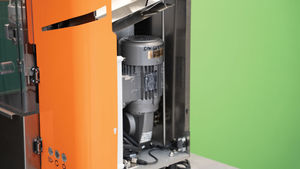
Few things say good morning like a glass of fresh orange juice. Thanks to the rise of in-store juicing machines, you no longer need an orange grove out back, let alone a hand press and strong forearms to enjoy one. Just walk into any Sam’s Club in the country and you’ll find gallons of fresh juice in the cooler, squeezed on-site that same day.
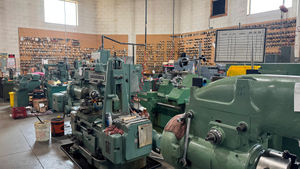
Sadly, we do not currently provide a gigantic, six-volume manufacturing series on the history of gears, bearings, couplings, brakes and motors with descriptions and details that would make the likes of Leo Tolstoy or J.R.R. Tolkien jealous with envy. One day, at the very least, I’d like to put down on paper a travel narrative about the gear and bearing shops I’ve visited since 2008 and the impact each has had on U.S. manufacturing.

NASA’s successful Artemis II mission represented the first crewed lunar mission since Apollo 17 in 1972 as well as a major leap forward in humanity’s return to deep space exploration. The mission launched on April 1, 2026, and lasted approximately nine days, one hour and 32 minutes.
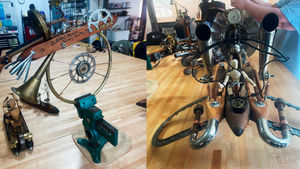
Bruce Rosenbaum, reimagineer and owner of ModVic, LLC, said the air at Snow Farm, the New England Craft Program located in Williamsburg, MA, is usually filled with the scent of sawdust or the glow of a kiln. but recently, it hummed with a different kind of energy—mechanical, historical and re-imaginative. Under Rosenbaum’s guidance, a group of 10 skilled artists and makers showed that when it comes to art, they certainly know how to ‘shuttle’ in a new era of creativity.


Part of my job is getting into rooms that our members may not have time to visit themselves. Over the past two months, I attended three events covering the emerging technology spaces most relevant to the gear and bearing industry: RAPID in Boston, April 13–16; Xponential, the premier drone and unmanned systems show, May 11–14; and the Boston Robotics Summit, May 27–28. Here is what I took away from each one.

I’ve been reading T.S. Eliot’s Four Quartets for most of my adult life. My relationship to it has evolved the way great long friendships do. There are years I stay in touch and years I drift away. When I come back, the poem hasn’t changed, but I have. Different passages come in and out of focus depending on where I am in my life and the day I am reading. A line near the end of “Little Gidding,” the last of the quartets, summarizes this sustained experience of the poem itself: We shall not cease from exploration / And the end of all our exploring / Will be to arrive where we started / And know the place for the first time.

Today, we travel back in time to 1996 when the Red Line train was a maze of passengers reading either the Chicago Tribune or the Chicago Sun Times. You couldn’t find a seat where you wouldn’t accidentally get hit in the face by someone flipping the pages of a big, bulky newspaper.

I’ve been rereading Self-Consuming Artifacts by Stanley Fish, published in 1972, a classic of literary criticism on the experience of reading, and now I see its central thesis everywhere. Fish argues that certain texts don’t deliver a meaning so much as put you through something. They build a framework, make you invest in it, and then show you its limits. The text, as he puts it, consumes itself: “it is self-sharpening and what it sharpens is you.” I realize this sounds like an odd thing to bring up in Gear Technology, but one hopes every issue of the magazine is in some way an active experience that requires the reader to work, question their own assumptions, and possibly change their perspective.

When I attended the VDI International Conference on Gears in Garching in 2023, I was struck by how few American engineers were in attendance and by how much they were missing. This summer, another VDI conference in Baden-Baden should be on everyone's radar.
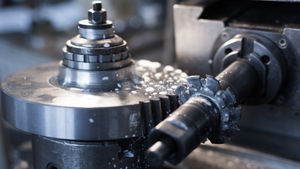
The gear blank is the quality ceiling of the finished gear. This article covers two areas of material specification that directly affect gear performance: controlling hardenability when sourcing blanks across global supply chains, and specifying microalloyed steels for high-temperature carburizing.

We have all seen the Q4 2025 headlines around electric vehicle (EV) sales and they were not good. Ford recorded a $19.5B loss in EV pullbacks (Ref. 1). General Motors posted $6B in EV debt (Ref. 2). Stellantis took a $26B hit which was compounded by underperforming EV sales and recovery from the previous CEO’s disastrous cost-cutting strategy (Ref. 3). Also, notably, was the laundry list of not-long-ago hailed startups that have went bankrupt, often leaving investors, suppliers and employees holding the bag: Bollinger, Canoo, Nikola, ELMS, Lordstown, Fisker, Arrival, Proterra, Volta just to name a few. Many more are on the brink along with dozens of startup suppliers that enticed investors with untold wealth to be gained in the automotive revolution 2.0 (Ref. 6,13,14).

Greetings 2026! As expected, EV demand has waned following some deregulation and tax credits being dropped as of September 2025. For us industry folks, this is simply reality catching up with the narrative. On the plus side, 2025 was a very good year for global vehicle sales–the best since 2019 (Ref. 1). A good economy can forgive many blunders. As gearbox designers, our work continues as our EV offerings are likely a permanent part of our product lineup, even if at a reduced volume.

I am bummed my schedule prevented a quick trip to CES 2026 in Las Vegas this year. Last year, I was wandering the technology halls studying the latest drones, e-bikes, humanoid robots, and electric motor technologies.

Drones are tasked with providing state-of-the-art autonomous capabilities, unique movements, automated inspection, urban delivery solutions and advanced military operations. They upgrade agricultural farming technology, provide safety and logistic solutions and report key disaster and engineering mapping. PT components such as motors, controllers, and sensors are an integral part of their core structure.

When Australian steelmaker InfraBuild needed two new circuit breakers to provide backup for its main electric arc furnace, ABB had the solution—its VD4-AF vacuum circuit breaker with an innovative servomotor actuation system that delivers more than five times the operations of a standard breaker, supporting greater reliability and safety as well as lower operational costs.

Of the 137 respondents to our annual gear-industry survey, the message was clear: tariffs are the defining challenge of 2026. But the frustration runs deeper than the duties themselves. Manufacturers can absorb cost increases; they can’t absorb chaos. When rules shift weekly and exemptions evaporate overnight, planning becomes guesswork. One respondent captured the exhaustion: “In 2025, they were all over the place, without warning, up and down. Terribly disorganized.” Yet within this turbulence, distinct currents run strong. Defense and aerospace work has surged. Oil and gas, buoyed by loosened regulations, is “very active” according to multiple respondents, with mobile power units and gas compression driving demand. Overhaul and repair business is booming—when new equipment becomes expensive or hard to source, companies keep existing machines running longer, and that means gears.

To meet the increasing demand for electronic control products, drive technology specialist, Nord Drivesystems, is expanding production capacities at their Aurich facility in Germany. This location has been manufacturing the company’s electronic drive components since the 1980’s and every Nord electronic drive, whether a control cabinet or decentralized solution, has been produced at the plant regardless of whether it is used in Europe, China, North America, or anywhere else in the world. Last August, Nord held a topping-out ceremony for the new building, celebrating the placement of the final, highest beam on the building’s structure.

MPT Expo 2025 welcomed 4,425 industry professionals including executives, engineers, plant managers, supply chain experts, military personnel and more.

From its origins as a small machine shop to becoming a global leader in precision engineering, Gleason Corporation has continuously redefined the industry. This journey, marked by pioneering inventions and strategic expansions, has left an indelible mark on sectors ranging from automotive and aerospace to robotics and renewable energy.

The Motion + Power Technology Expo (MPT Expo) returns to Detroit from October 21–23, 2025, colocated with Heat Treat 2025, creating one of North America’s most comprehensive gatherings for mechanical, fluid, and electrical power transmission, materials processing, and thermal treatment technologies. This year’s events bring together engineers, researchers, technologists, and decision-makers from across industries to explore, connect, and advance the design, production, and integration of cutting-edge systems that keep modern manufacturing moving.

Step into an autumn landscape, and it quickly becomes clear that nature has little regard for tidy rules. Leaves spiral unpredictably, pumpkins swell into odd asymmetries, and apples wrinkle and pucker around their stems. Yet engineers have long clung to the comforting principle that form follows function, as if everything were designed purely to serve its purpose without deviation. Harvard’s L. Mahadevan, professor of applied mathematics, physics, and biology, reminds us that this is rarely the case. Through studies of crumpled paper, folding brains, termite architecture, and the trajectories of coins, he shows that what first appears chaotic often obeys a hidden logic—intricate, surprising, and unexpectedly beautiful.

If you are not familiar with the trade show world, it can be quite overwhelming. In a matter of days (with months and even years of planning behind it), you will see a large, empty convention center turn into a city filled with booths and exhibits that are bustling with companies all vying to showcase their products and solutions. Motion + Power Technology Expo (formerly Gear Expo) remains one of my favorite shows of all time. It not only taught me about the importance of face-to-face networking, but it truly helped me in my professional development.

WEG, Petrobras, and Statkraft have put into operation the largest onshore wind turbine in the Americas. Petrobras invested BRL 130 million, originating from the R&D clause with ANP, and partnered with WEG, a global Brazilian manufacturer of electrical and electronic equipment, to develop the turbine. The project also received financing from BNDES and support from the Federal Government through the Ministry of the Environment. Built by WEG, with 7MW of installed capacity, it can generate around 2,500 MWh per month, equivalent to the annual consumption of about 15,000 Brazilian homes.



Contact | Privacy Policy
©2026 Power Transmission Engineering